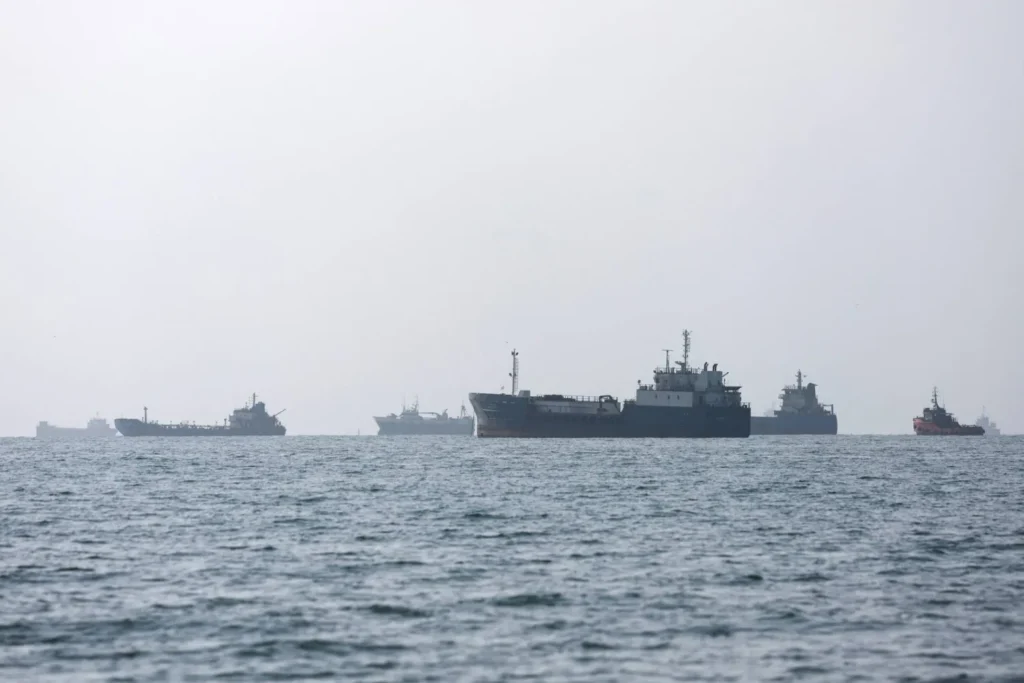
Tensions between the United States and Iran have sharply increased after the US military destroyed five Iranian oil tankers near Kharg Island and in the Gulf of Oman.
The strikes came after Iran’s Islamic Revolutionary Guard Corps (IRGC) launched ballistic missiles toward a US Navy warship on two occasions over two days, according to the US Central Command (CENTCOM). The American warship avoided the attacks, and no US personnel were reported injured.
The latest military action is important because Kharg Island is one of Iran’s main oil-export hubs. Any prolonged disruption in the area could affect oil shipments and add pressure to global energy markets.
The US military said the five tankers were part of what it described as a large “shadow network” that helps generate money for the IRGC and its regional proxy groups. Iran, meanwhile, has threatened further retaliation and has continued to challenge US military activity in the Gulf.
The situation is developing quickly, with both sides carrying out or threatening additional attacks. That makes the latest tanker strikes more than an isolated military incident. They are part of a wider escalation involving military forces, oil exports and the strategically important Strait of Hormuz.
US Strikes 5 Iranian Oil Tankers
According to CENTCOM and reporting from multiple news organizations, US forces destroyed five Iranian crude oil carriers on September 8.
Four of the tankers were identified as M/T Kaviz, M/T Charminar, M/T Horizon 1 and M/T Riesco. These vessels were struck in the Gulf of Oman.
A fifth vessel, M/T Derya, was targeted near Kharg Island.
The US military said crews were ordered to leave the ships before the strikes were carried out.
CENTCOM described the vessels as part of a network allegedly connected to the financing of Iran’s Revolutionary Guard and regional armed groups.
The US action followed an earlier series of strikes on Iranian tankers just days before.
On September 5, CENTCOM announced that it had destroyed or disabled three other Iranian crude oil carriers after Iranian forces targeted two US Navy ships.
This means the US has now taken military action against a larger number of Iranian oil vessels within a short period.
Why Did the US Attack Iranian Tankers?
The immediate reason given by the US government is Iran’s attacks on American naval forces.
CENTCOM said the IRGC launched ballistic missiles toward two US Navy warships. The US military said the attacks failed and that its ships continued their patrols.
The latest US strikes were presented as a military response.
US officials have also argued that the targeted tankers were not simply commercial vessels. Washington says they were connected to a shadow oil network that generated money for the IRGC and its regional proxy forces.
The US therefore views attacks on these vessels as part of its wider campaign to reduce Iran’s ability to finance military operations.
However, Iran has strongly opposed US actions and has threatened retaliation.
The continuing exchange raises concerns that attacks could spread to more commercial ships and important energy infrastructure.
What Happened Near Kharg Island?
Kharg Island is particularly important to Iran’s energy industry.
The island sits in the Persian Gulf and serves as a major oil-export terminal for Iran.
That makes it strategically important during any conflict involving Iran and the United States.
The latest US action near the island follows an earlier tanker strike in the same area.
On September 5, CENTCOM said one Iranian crude carrier was disabled off Kharg Island. Another vessel was targeted near Jask, while a third was destroyed in the Gulf of Oman.
The latest strikes therefore show that the US is targeting Iranian oil-related shipping across a wider area.
This could make the region more dangerous for commercial shipping.
Iran Targets US Navy Ships
The US says the tanker attacks followed Iranian missile attacks against American warships.
According to CENTCOM, an American aircraft carrier and a guided-missile destroyer came under attack from Iranian ballistic missiles.
The US military said the attacks did not cause American casualties.
The Iranian attacks are part of a broader confrontation that has been developing in the region for months.
The latest exchange shows that the conflict is no longer limited to strikes against land-based military targets.
Naval forces and oil shipping are now directly involved.
That raises the risk of further incidents in one of the world’s most important maritime energy corridors.
Iran Threatens Retaliation
Iran has promised a strong response to the latest US attacks.
After the five tankers were destroyed, Iran launched ballistic missiles toward US forces at the Al Azraq air base in Jordan, according to reports.
Jordan said its forces intercepted most of the missiles. Reuters reported that Jordan said 18 of 20 ballistic missiles were intercepted, with no casualties reported from that attack.
Iran has also claimed additional attacks against US-linked vessels.
Some of these claims could not be independently verified.
This distinction is important when following fast-moving military news.
Statements from governments involved in a conflict can contain claims that are difficult to confirm immediately. Independent verification can take time, particularly when attacks occur at sea.
Why the Strait of Hormuz Matters
One of the biggest concerns is the Strait of Hormuz.
The narrow waterway connects the Persian Gulf with the Gulf of Oman and the Arabian Sea.
It is one of the world’s most important routes for oil and gas shipments.
Any major disruption in the strait could affect energy supplies far beyond the Middle East.
Iran has threatened restrictions on shipping through the region, while the United States says it intends to maintain maritime access and protect shipping routes.
The possibility of a wider disruption has already affected oil markets.
Recent reports showed Brent crude moving close to $100 per barrel as traders reacted to the growing risks in the region.
Oil Prices Rise as Middle East Tensions Grow
The US strikes are not only a military story.
They are also an economic story.
Oil prices respond quickly to fears about supply disruptions.
The Persian Gulf is home to some of the world’s largest oil producers and export routes. Any threat to shipping can therefore create concern among traders, energy companies and governments.
The Financial Times reported that Brent crude moved toward $100 per barrel following the latest escalation.
Other reports indicated that Brent eventually moved above $100 as concerns about wider disruption increased.
If the conflict continues to affect tanker traffic, prices could remain under pressure.
Higher oil prices can also affect transportation, manufacturing, and household costs because petroleum products are used across many parts of the economy.
What Is Iran’s Oil Shadow Network?
The US has described the targeted vessels as part of a large Iranian oil “shadow network.”
The term generally refers to methods used to move oil while attempting to avoid international sanctions and restrictions.
Such networks can involve complex ownership structures, changes in vessel names or flags, ship-to-ship transfers, and other methods intended to make it harder to identify the origin or destination of cargo.
US officials say the network targeted in these strikes helps finance the IRGC and its regional partners.
The US has already used sanctions as a major tool against Iranian oil exports.
The military strikes represent a much more direct approach.
Instead of only restricting money through financial sanctions, the US is now physically targeting vessels that it says are connected to the network.
US Also Announces New Iran Sanctions
The tanker strikes came alongside another pressure campaign against Tehran.
The Trump administration announced new sanctions targeting Iran’s aviation sector.
The measures reportedly target 27 Iranian airlines and nine service providers, sales agents and other entities that Washington accuses of supporting Mahan Air.
Mahan Air has been under US sanctions since 2011, and Washington has accused the airline of supporting the IRGC.
The combination of military strikes and sanctions shows that the US is using several forms of pressure against Iran.
The goal is to limit Iran’s military capabilities and its ability to generate funds for organizations that Washington considers threats.
The Conflict Has Been Escalating for Months
The latest tanker strikes did not happen in isolation.
The US-Iran confrontation has involved military action, threats, sanctions and failed diplomatic efforts.
There have been periods of relative calm, followed by renewed attacks.
Reuters reported that the current escalation follows a wider conflict that began after US and Israeli military action against Iran earlier in 2026.
The situation has created uncertainty across the Middle East.
Countries in the region are concerned about the possibility of the conflict spreading beyond Iran and the United States.
The presence of US forces, Iranian missiles, regional armed groups and international shipping makes the situation particularly difficult to control.
Houthi Attacks Add Another Risk
The conflict has also affected other parts of the region.
Iran-aligned Houthi forces in Yemen have launched attacks that have added pressure to shipping and energy infrastructure.
Recent reports said Houthi forces attacked locations in Saudi Arabia, including energy-related facilities.
These developments matter because they can create multiple pressure points across the Middle East.
A conflict involving Iran could therefore affect the Persian Gulf, the Red Sea and nearby energy infrastructure at the same time.
That would make the economic impact much larger than a conflict limited to one country.
Why Global Shipping Is Watching the Crisis
Shipping companies are closely watching developments around Iran.
Oil tankers and other commercial vessels need safe maritime routes to operate.
If military attacks increase, shipping companies may choose to avoid certain areas or demand higher insurance premiums.
That can increase the cost of transporting oil.
In extreme situations, vessels may be forced to take longer routes.
Such disruptions can eventually affect consumers because transportation costs are included in the price of many goods.
The Strait of Hormuz is therefore important not only to oil companies but also to the wider global economy.
Could the Conflict Spread Further?
That is one of the biggest questions following the latest strikes.
The exchange has already moved through several stages.
Iran has attacked or attempted to attack US naval assets.
The US has responded by targeting Iranian oil vessels.
Iran has then launched attacks against US-linked targets and threatened further action.
Each step increases the possibility of another response.
The danger is that a limited military confrontation could turn into a much broader regional conflict.
Countries such as Jordan, Saudi Arabia, and other Gulf states could face greater security risks if attacks continue.
What Happens Next?
The next phase will depend heavily on how Washington and Tehran respond to each other.
The US has made clear that it is willing to target Iranian oil assets if it believes those assets are supporting the IRGC.
Iran, meanwhile, has threatened to increase pressure on US forces and shipping in the region.
Diplomatic efforts could still reduce tensions, but recent developments suggest that the immediate situation remains highly unstable.
For oil markets, the key question will be whether attacks remain limited or begin affecting major shipping routes.
For governments in the region, the priority will be preventing the conflict from expanding.
For ordinary consumers, the most visible effect could eventually come through higher fuel and transportation costs.
What the US-Iran Tanker Strikes Mean for the World
The US strikes on five Iranian oil tankers near Kharg Island represent a major escalation in the confrontation between Washington and Tehran.
The US says the attacks were carried out after Iranian missiles targeted American warships and that the tankers were part of a network supporting the IRGC.
Iran has rejected US pressure and threatened retaliation.
The conflict now involves not only military forces but also oil tankers, sanctions and critical shipping routes.
The most important issue to watch will be the security of the Strait of Hormuz.
If the waterway remains open and commercial shipping continues, the economic impact may remain manageable.
If attacks spread to commercial vessels or the route becomes seriously restricted, the consequences could be much larger.
Oil prices, shipping costs and global inflation could all come under additional pressure.
For now, the situation remains fluid. Claims from both sides are continuing to emerge, and some battlefield statements cannot be independently verified.
What is clear is that the latest tanker strikes have taken the US-Iran confrontation into an even more dangerous phase, with consequences that could extend well beyond the Middle East.