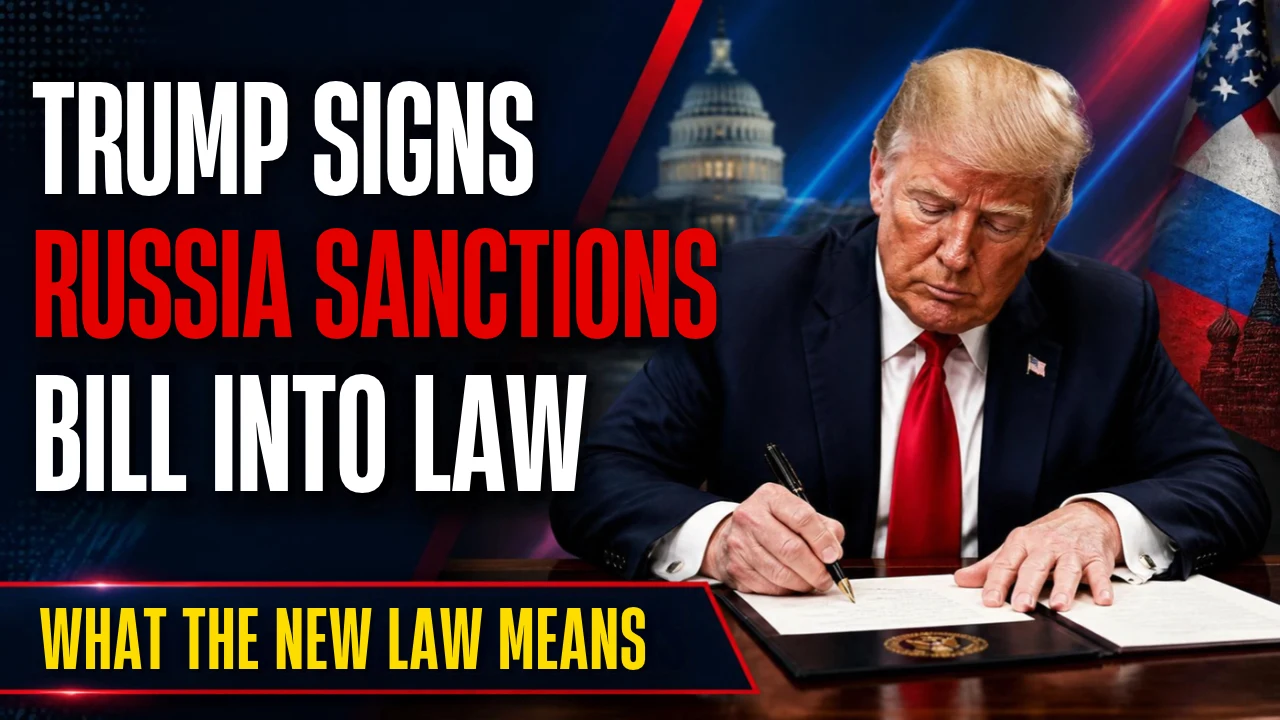
U.S. President Donald Trump has signed a new Russia sanctions bill into law, giving the United States additional tools to put economic pressure on Russia and countries that continue to buy Russian energy.
Trump signed the legislation on September 18, 2026, after Congress passed the bill with support from members of both major U.S. political parties. The White House said the law authorizes and expands sanctions, tariffs, and other restrictions targeting Russia while also extending existing sanctions on Iran.
The legislation is formally known as the Lindsey O. Graham Sanctioning Russia and Iran Act of 2026. It was named after the late Senator Lindsey Graham, who had worked on the legislation before his death in July.
The law targets several areas of Russia’s economy, including its energy and defense sectors, financial institutions, and the network of oil tankers often called the “shadow fleet.” It also gives the president new authority to impose tariffs of up to 100% on major buyers of Russian oil and natural gas.
The new law could therefore affect not only Russia but also countries that continue to purchase Russian energy.
What Is the New Russia Sanctions Law?
The new law is a broad sanctions package designed to increase economic pressure on Russia.
The legislation had been under discussion in Congress for more than a year. The Senate passed it by 86-11 on August 7, 2026, while the House approved it 262-159 on September 16. Trump then signed it two days later.
The White House says the law expands statutory sanctions, tariffs, and prohibitions related to Russia. It also extends existing sanctions involving Iran.
The legislation comes as Russia’s war in Ukraine continues and Washington considers additional ways to influence Moscow’s economic resources.
Why Did Trump Sign the Bill?
The law gives the U.S. government additional legal tools to put pressure on Russia.
A major focus is Russia’s ability to earn money from energy exports.
Russia remains a major producer and exporter of oil and natural gas. Revenue from those exports is an important part of the country’s economy.
The new legislation therefore targets parts of the energy trade, along with financial institutions, officials and other entities connected to Russia.
Reuters reported that the law is intended to increase economic pressure on Russia over its invasion of Ukraine and targets the country’s energy and defense industries as well as its shadow fleet of tankers.
The law also creates a mechanism that can affect countries outside Russia.
New Tariff Powers for the President
One of the most significant parts of the legislation concerns tariffs.
The law gives Trump authority to impose tariffs of up to 100% on the five largest buyers of Russian oil and natural gas.
This provision matters because some major economies continue to import Russian energy.
China and India are among the largest buyers of Russian crude oil, meaning companies and industries connected to those markets could be affected if the tariff authority is used.
The legislation does not mean that a 100% tariff automatically applies to those countries.
Instead, it gives the U.S. president the authority to impose such tariffs.
That difference is important.
The law creates the power to take further action, while the actual use of that authority remains a separate decision.
How Could the Law Affect India?
India is one of the countries that could face attention under the new tariff provisions because it has remained a major buyer of Russian crude.
According to reporting by Al Jazeera, India and China are the two largest importers of Russian crude oil and could therefore face the greatest exposure to the new tariff authority if the United States uses it.
India has said that it remains committed to its energy security.
For India, Russian oil has become an important part of its energy supply since Western countries introduced earlier sanctions and restrictions following Russia’s invasion of Ukraine.
The new U.S. law could therefore create another factor for Indian policymakers, refiners and energy companies to consider.
However, the law itself does not automatically impose a 100% tariff on Indian imports.
Any future tariff action would depend on decisions by the U.S. administration.
What About China?
China is another major buyer of Russian energy.
The new law gives the president authority to impose tariffs on major buyers of Russian oil and natural gas. This means China could also face additional trade pressure if the administration uses that authority.
The timing is notable because Trump is expected to meet Chinese President Xi Jinping at the White House on September 24, according to recent reporting.
The potential tariff authority therefore adds another issue to the wider U.S.-China economic relationship.
It remains uncertain how the administration will use the new powers.
Russia’s Energy Industry Is a Major Target
Energy plays a central role in the new law.
The legislation targets Russia’s energy sector as part of a broader effort to reduce the money available to Moscow from oil and gas exports.
Oil and gas sales have been an important source of revenue for Russia.
By targeting the energy trade, U.S. policymakers are seeking to create financial pressure without directly using military force.
Sanctions can affect companies, banks, shipping networks, insurance providers, and other organizations involved in international trade.
The effects can therefore extend beyond the specific Russian companies named in sanctions.
What Is Russia’s “Shadow Fleet”?
The new law also targets what is commonly known as Russia’s shadow fleet.
The term refers to groups of older or differently registered tankers that have been used to transport Russian oil while helping traders work around Western restrictions.
Reuters reported that the legislation targets Russia’s shadow fleet of tankers that help Moscow evade existing sanctions.
These vessels have become an important part of discussions about enforcement.
Sanctions can restrict which companies are allowed to provide services such as insurance, financing and shipping support.
The new legislation gives the U.S. additional authority to target parts of this network.
Russian Banks and Financial Institutions Also Face Measures
The law also expands sanctions involving Russian banks and financial institutions.
Financial restrictions can make it more difficult for targeted organizations to access international markets or conduct transactions involving the U.S. financial system.
The new legislation includes Russian banks and financial institutions among its targets, according to multiple reports on the signed law.
These measures form part of a broader sanctions system that the United States and its allies have developed since Russia’s full-scale invasion of Ukraine in 2022.
Russian Officials and Oligarchs
The new legislation also targets Russian officials and wealthy individuals connected to the Russian government.
Reports on the law say it includes sanctions against Russian President Vladimir Putin, senior officials and oligarchs.
Personal sanctions can involve restrictions on assets, financial transactions and travel, depending on the specific measure imposed.
The goal is to increase the economic cost for individuals and organizations connected to the Russian state.
The Law Also Includes Iran
Despite the focus on Russia, the legislation also deals with Iran.
The White House said the law extends existing sanctions on Iran.
Reports say the measures include Iran’s energy and weapons sectors.
This means the legislation is not exclusively a Russia sanctions bill.
Its formal title reflects both countries.
How Congress Passed the Bill
The legislation received strong bipartisan support in the Senate and House, although it also faced opposition.
The Senate passed the bill 86-11 in August.
The House later passed it 262-159 on September 16. Reuters reported that 58 Democrats joined Republicans in supporting the House measure.
After the House vote, the legislation went to Trump’s desk.
Trump signed it into law on September 18.
The bipartisan votes are notable because the legislation gives the president additional powers over sanctions and tariffs, an area that has generated debate in Congress.
Why Some Lawmakers Opposed the Bill
Support for the bill was not universal.
Some Democratic lawmakers raised concerns about the expanded tariff authority.
House Democratic Leader Hakeem Jeffries argued that the legislation could give Trump too much power to impose tariffs and could increase costs for American consumers. Reuters reported that opponents also raised concerns about exceptions and the president’s ability to decide whether sanctions are in the national interest.
These are political arguments about how the new powers should be used.
The law itself now provides the authority.
How the administration applies that authority will determine its practical effects.
Ukraine Welcomes the New Law
Ukrainian President Volodymyr Zelenskyy has supported the legislation.
After Trump signed the bill, Zelenskyy thanked him for approving the measure. ABC News reported that Zelenskyy described the law as important for increasing pressure on Russia.
Ukrainian officials have repeatedly called for stronger economic pressure on Russia as the war continues.
The new law gives the United States another legal tool for that purpose.
What Could Happen to Global Oil Markets?
Energy markets will be watching how the United States uses the new sanctions and tariff powers.
Oil is traded through a global network involving producers, refiners, shipping companies, financial institutions, and consumers.
If sanctions reduce the amount of Russian oil reaching international markets, buyers may need to find alternative suppliers.
That could affect prices and shipping patterns.
However, the actual market impact will depend on how the administration implements the law, how Russia responds, and how other countries and companies adjust.
The law itself does not automatically remove all Russian oil from global markets.
Could the Law Affect Global Trade?
Yes, potentially.
The new tariff authority extends the possible effects beyond Russia.
If the United States imposes tariffs on countries that continue to purchase Russian energy, businesses in those countries could face higher costs when selling goods into the U.S. market.
The effects could spread through supply chains.
For example, higher tariffs can influence import costs, product prices and business decisions.
The scale of any impact will depend on which countries are targeted, what tariff rates are used and how long the measures remain in place.
What Does the Law Mean for Businesses?
Companies involved in international trade will need to monitor developments closely.
Businesses that deal with Russian oil, Russian financial institutions, shipping companies or other sanctioned entities may face additional compliance requirements.
Companies in countries that buy Russian energy may also need to examine whether future U.S. tariff actions could affect their exports to the American market.
Financial institutions and multinational companies will likely need to continue checking sanctions lists and government announcements.
For companies operating internationally, sanctions compliance is already an important part of risk management.
The new legislation adds another layer to that process.
What Does the New Law Mean for Russia?
The main purpose of the legislation is to increase economic pressure on Russia.
It targets several sources of economic activity, including energy exports, financial institutions and shipping networks.
The law also creates the possibility of additional pressure on countries that continue to purchase Russian energy.
Russia’s response could include diplomatic action, changes to energy trade, new trade arrangements or other economic measures.
The full effect will depend on how the law is implemented and how Russia and other countries respond.
What Happens Next?
Signing the bill into law is not the end of the process.
The next important step will be implementation.
U.S. government agencies will need to apply the new statutory authorities.
The Trump administration will also decide how and when to use the tariff powers provided by the legislation.
Businesses and foreign governments will watch those decisions closely.
The United States may also coordinate with allies and other countries on sanctions enforcement.
The signing of the Russia sanctions bill gives the United States new legal tools to apply economic pressure on Russia and, potentially, countries that continue to buy Russian energy.
The Lindsey O. Graham Sanctioning Russia and Iran Act of 2026 targets several parts of Russia’s economy, including energy, defense, banking, and shipping. It also gives President Trump authority to impose tariffs of up to 100% on major buyers of Russian oil and natural gas.
For Russia, the legislation adds to the existing network of U.S. sanctions.
For countries such as India and China, the new tariff authority creates a potential additional trade issue, although the law does not automatically impose those tariffs.
For businesses, the next stage will be implementation and compliance.
The practical impact of the new law will become clearer as the Trump administration decides which provisions to use and how other governments, companies and energy markets respond.