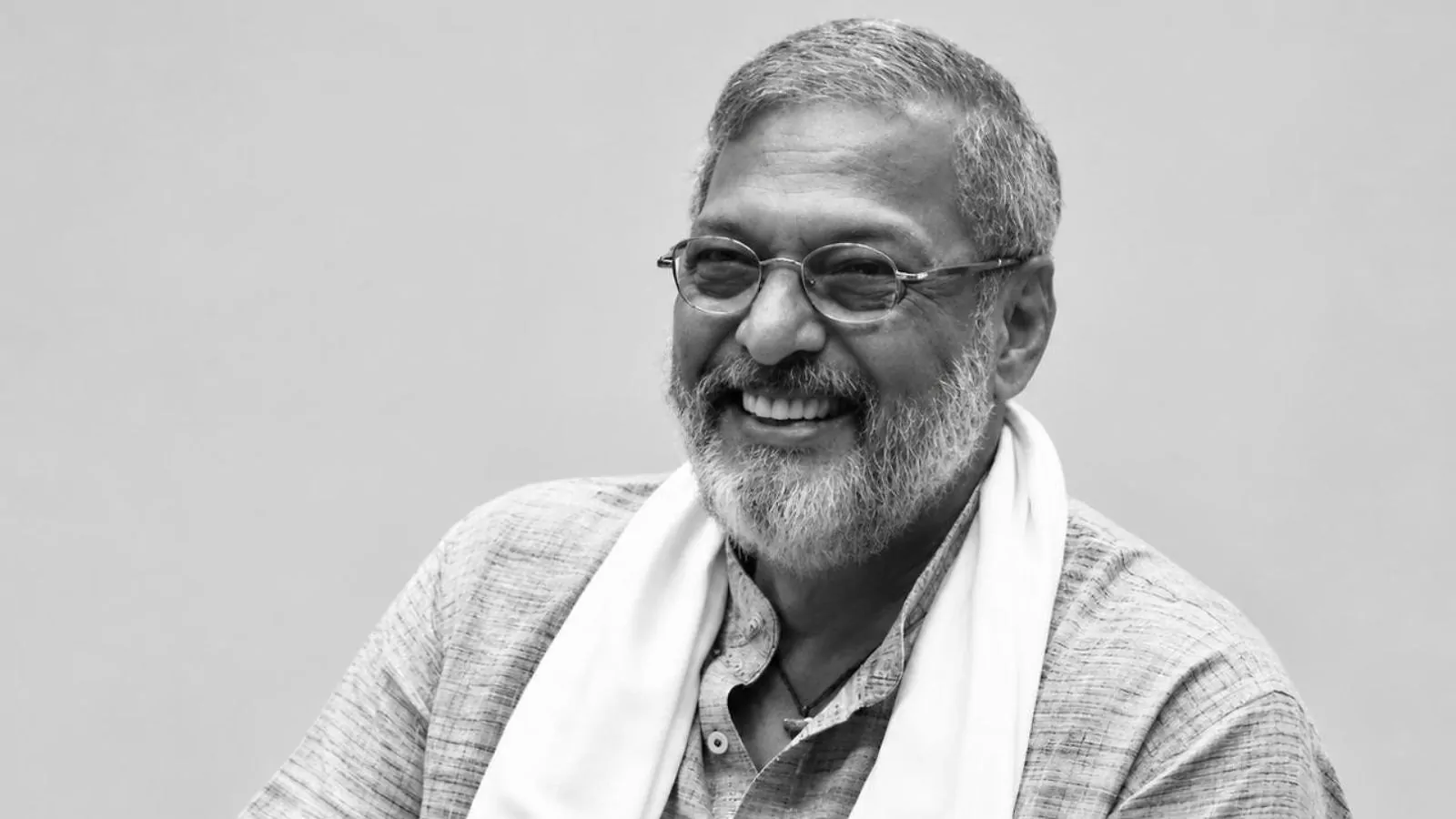
Indian cinema has lost one of its most distinctive and respected performers. Nana Patekar dies at 75 on October 8, 2026, after suffering a cardiac arrest at his residence in Dona Paula, Goa. The news has left fans, actors and the wider Indian film industry deeply saddened.
Patekar was known for his powerful acting, strong dialogue delivery and ability to bring complicated characters to life. Over a career spanning nearly five decades, he worked in Hindi and Marathi cinema and became one of India’s most recognisable character actors.
According to reports, Patekar was found unconscious at his Goa residence in the early hours of Thursday. He was taken to Manipal Hospital, where doctors attempted to revive him for around 45 minutes. He was declared dead at about 5:20 a.m.
Nana Patekar Dies at 75 in Goa
Nana Patekar was 75 when he died. Reports say he had experienced discomfort and chest pain before his condition became critical.
Doctors at Manipal Hospital attempted CPR and other efforts to revive him, but he could not be saved. A medico-legal case was registered, and a post-mortem examination was planned as part of the official procedure.
Reuters also reported that Patekar was found unconscious at his home in Goa and that doctors identified cardiac arrest as the cause of death, although the exact trigger was not immediately known.
His son, Malhar Patekar, confirmed the death, according to Indian media reports.
The sudden loss has prompted tributes from people across the film industry and public life.
Who Was Nana Patekar?
Nana Patekar was born Vishwanath Patekar on January 1, 1951, in Maharashtra. He began his career in theatre before moving into films.
Unlike many mainstream stars, Patekar built his reputation primarily through his acting ability. He was equally comfortable playing serious, aggressive, emotional, and comic characters.
His performances often had a raw and natural quality. His voice, expressions, and dialogue delivery became important parts of his screen identity.
He made his Hindi film debut with Gaman in 1978. From there, he gradually established himself as a major performer in Hindi and Marathi cinema.
His career later included some of the most respected films in Indian cinema.
Nana Patekar’s Most Famous Films
One of the biggest strengths of Nana Patekar’s career was his range. He did not remain limited to one type of character.
Parinda
Parinda was one of the major films that helped establish Patekar as a powerful performer. His work in the film earned him the National Film Award for Best Supporting Actor.
The film remains an important part of Indian crime cinema, and Patekar’s performance is still remembered by audiences and critics.
Krantiveer
In Krantiveer, Patekar delivered one of his most memorable performances. His portrayal of Pratap Narayan Tilak earned him the National Film Award for Best Actor.
The film showed his ability to play emotionally intense characters while maintaining a strong screen presence.
Agni Sakshi
Patekar also received a National Film Award for Best Supporting Actor for Agni Sakshi.
His work demonstrated that he could create memorable characters even when he was not playing the central protagonist.
Ab Tak Chhappan
Another important film in his career was Ab Tak Chhappan, where he played a police officer.
The role suited his serious acting style and became one of his best-known performances in the crime genre.
Natsamrat
Patekar also made a major impact in Marathi cinema with Natsamrat.
The film allowed audiences to see a different side of his acting. His performance as an ageing theatre actor dealing with life, family, and personal loss received widespread appreciation.
Welcome
While Nana Patekar was widely respected for serious roles, he also showed his comic timing in Welcome.
His portrayal of Uday Shetty became one of the most popular comic characters of his career. The role introduced his work to a much wider mainstream audience and showed that his intense personality could also be used for comedy.
This ability to move between serious drama and comedy was one of the reasons Patekar remained relevant across generations.
A Career Beyond Bollywood
Although many people know Nana Patekar primarily as a Bollywood actor, his career was not limited to mainstream Hindi cinema.
He had strong connections with Marathi theatre and films and continued to work across different areas of Indian entertainment.
He was also a director and writer. His directorial debut came with Prahaar: The Final Attack in 1991, a film inspired by military life in which he also played the lead role.
His interest in the armed forces was another important part of his public life. He was associated with the Territorial Army and received the honorary rank of Lieutenant Colonel. Reports also note his involvement with Army personnel during the Kargil War.
Nana Patekar’s Awards and Recognition
Nana Patekar’s contribution to Indian cinema was recognised with several major awards.
He was a three-time National Film Award winner, receiving recognition for performances in films including Parinda, Krantiveer and Agni Sakshi.
He was also honoured with the Padma Shri in 2013 for his contribution to Indian cinema.
These awards reflect the importance of his work across different periods of Indian cinema.
However, his legacy cannot be measured only through awards. For many viewers, Patekar represented a style of acting that focused more on the character than on the image of the star.
Nana Patekar Continued Working in His 70s
Even in his 70s, Nana Patekar continued to appear in films.
His recent work included films such as Vanvaas, Housefull 5, O’Romeo and Subedaar.
His continued presence on screen showed his long-lasting connection with cinema.
His last public appearance was reportedly at an event in Dona Paula, Goa, on October 4, just four days before his death. He addressed the Samraat Club International installation ceremony at the event.
His final months also showed that he remained connected to his professional work. Recent reports noted his involvement in promoting his films and public appearances.
Why Nana Patekar Was Different
Nana Patekar never followed the traditional image of a Bollywood superstar.
His strength came from his acting.
He could play a police officer, politician, criminal, soldier, family man, or comic character and make each role feel different. His voice and dialogue delivery were especially recognisable.
In serious films, his intensity could make a scene feel emotionally heavy. In comedy, the same intensity became part of the humour.
That combination made him difficult to replace.
He also belonged to a generation of Indian actors who moved between theatre, art cinema and mainstream entertainment. His career demonstrated that an actor could become a major star without depending entirely on conventional hero roles.
Tributes Pour In for Nana Patekar
Following the news of his death, tributes began coming from across India.
Actors, filmmakers and public figures remembered Patekar for his individuality and contribution to cinema. Prime Minister Narendra Modi also paid tribute, describing his acting qualities as part of what made him stand apart over the decades.
Actor Akshay Kumar, who worked with Patekar, also remembered his unique talent and authenticity.
The reactions show how widely Patekar’s work was respected across different generations.
Nana Patekar’s Legacy in Indian Cinema
The death of Nana Patekar marks the end of a remarkable chapter in Indian cinema.
He worked for almost five decades and appeared in films that covered crime, politics, family relationships, social issues, comedy, and human drama.
His legacy will live through characters such as Uday Shetty in Welcome, his intense roles in Krantiveer, Parinda and Ab Tak Chhappan, and his acclaimed Marathi performances.
For younger actors, his career also offers an important lesson: strong acting does not always require the biggest role. A memorable performance can make a character more powerful than the film itself.
Patekar’s distinctive voice, expressive face and intense performances made him instantly recognisable. Few actors managed to create such a strong identity while moving between mainstream Bollywood, Marathi cinema and theatre.
Final Thoughts
Nana Patekar dies at 75, leaving behind a career that helped shape modern Indian character acting. From his early work in theatre and films to major Hindi and Marathi productions, he remained committed to performance rather than simply celebrity.
His films will continue to introduce his work to new audiences, while his most memorable characters will remain part of Indian popular culture.
The Indian film industry has lost a highly distinctive actor, but Nana Patekar’s performances will continue to speak for his contribution to cinema for years to come.