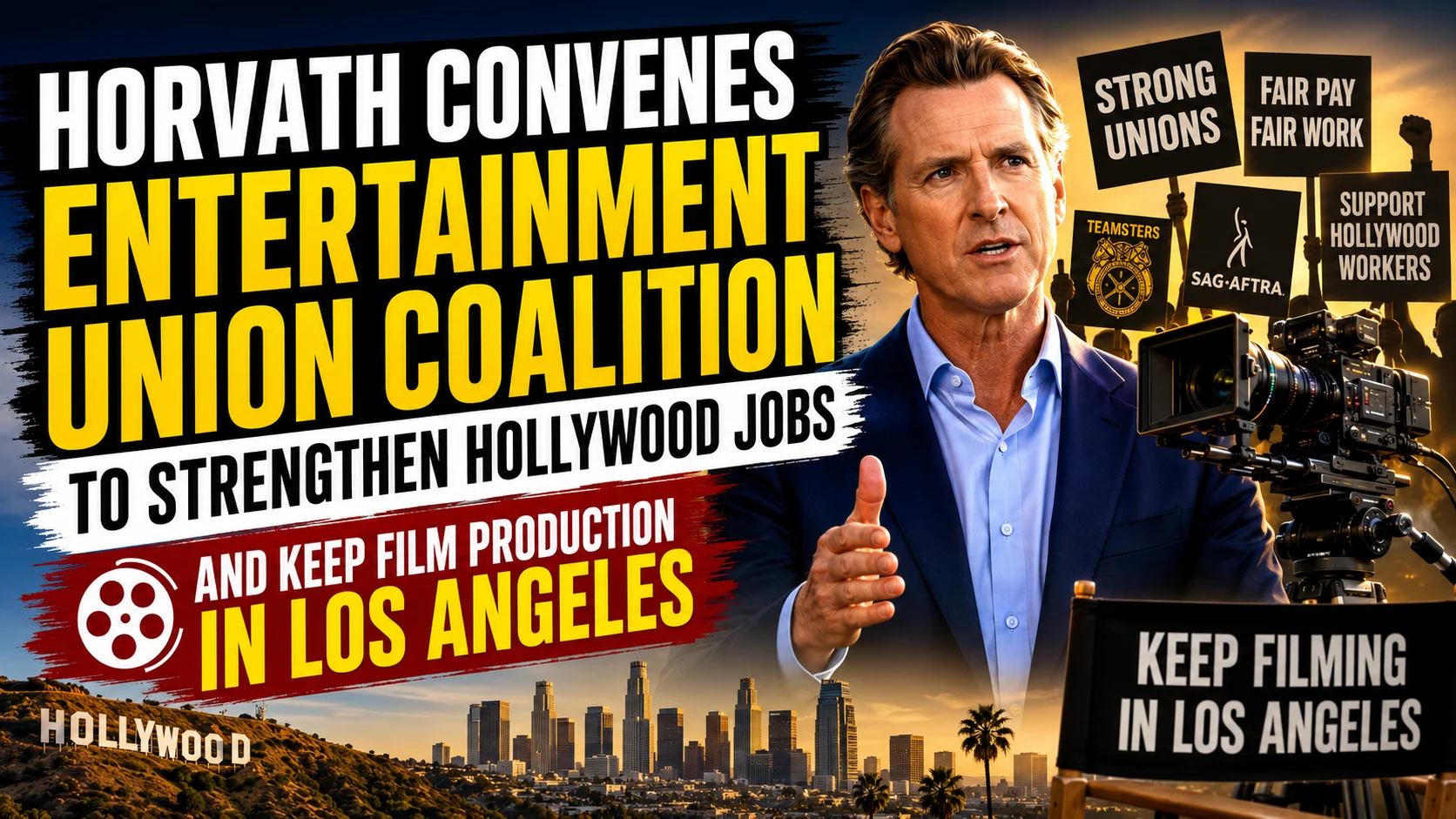
Hollywood has long been known as the entertainment capital of the world. From blockbuster movies and hit television shows to music and live productions, the industry supports hundreds of thousands of jobs and contributes billions of dollars to the economy. However, in recent years, Hollywood has faced significant challenges, including reduced local production, industry consolidation, rising production costs, and increasing competition from other states and countries.
To address these concerns, Los Angeles County Supervisor Lindsey P. Horvath recently convened the Entertainment Union Coalition to discuss practical solutions for protecting jobs, encouraging film production, and ensuring Hollywood remains a global entertainment leader. The meeting brought together representatives from several major entertainment unions to identify ways to strengthen the local industry and improve its long-term future.
This meeting represents another important step in ongoing efforts to support entertainment workers and keep more productions in Los Angeles County.
Why Hollywood Is Facing Challenges
Hollywood remains one of the world’s most influential entertainment hubs, but the industry has experienced major changes over the past few years.
Several factors have contributed to these challenges, including:
- Rising production costs
- Increased competition from other filming locations
- Industry mergers and consolidation
- Streaming platform changes
- Slower production schedules
- Labor disputes in recent years
Many productions have moved to states and countries offering better financial incentives, lower operating costs, and simplified filming regulations. As a result, thousands of entertainment workers have seen fewer job opportunities.
Industry leaders believe immediate action is necessary to reverse this trend.
Supervisor Lindsey Horvath’s Initiative
Supervisor Lindsey Horvath organized the meeting to bring labor leaders and local government together to discuss solutions for strengthening Los Angeles’ entertainment industry.
According to Horvath, Hollywood is too important to simply wait for market conditions to improve. She emphasized that local government must actively work with studios, unions, and businesses to ensure Los Angeles remains the creative capital of the world.
The meeting focused on practical actions that can encourage more productions to remain in Los Angeles while protecting workers and supporting local businesses.
What Is the Entertainment Union Coalition?
The Entertainment Union Coalition (EUC) represents several of Hollywood’s largest labor organizations.
The coalition includes representatives from:
- Writers Guild of America West (WGAW)
- SAG-AFTRA
- Directors Guild of America (DGA)
- Teamsters Local 399
- California IATSE Council
- LiUNA! Local 724
- American Federation of Musicians Locals 47 and 6
- IBEW Local 40
Together, these organizations represent thousands of professionals working across film, television, music, live events, and production services.
By working together, the coalition aims to protect jobs, improve working conditions, and strengthen California’s entertainment economy.
Key Topics Discussed During the Meeting
The meeting addressed several major issues affecting Hollywood today.
Expanding Production Incentives
One of the biggest priorities is expanding California’s Film and Television Tax Credit Program.
Many productions have relocated because competing states offer attractive financial incentives.
Union leaders believe stronger incentives can encourage studios to keep productions in California.
Expanded tax credits may help:
- Retain existing productions
- Attract new projects
- Create additional jobs
- Support local businesses
Supervisor Horvath reaffirmed her support for expanding production incentives at both the state and local levels.
Streamlining Film Permits
Obtaining filming permits can sometimes be slow and expensive.
The coalition discussed ways to modernize the permitting process.
Proposed improvements include:
- Faster approvals
- Reduced paperwork
- Lower administrative costs
- Simplified regulations
- New low-impact permitting options
Making filming easier could encourage more studios to choose Los Angeles over competing locations.
Supporting Entertainment Workers
Behind every successful movie or television series is a large workforce.
This includes:
- Actors
- Writers
- Directors
- Camera operators
- Electricians
- Costume designers
- Set builders
- Makeup artists
- Drivers
- Editors
Protecting these workers remains one of the coalition’s primary goals.
Participants discussed ways to create stable employment opportunities while ensuring long-term industry growth.
Addressing Industry Consolidation
Another important topic was the proposed Warner Bros.–Paramount merger and its potential impact on jobs.
Supervisor Horvath recently introduced a motion supporting legal action related to the merger, arguing that further consolidation could reduce competition and negatively affect employment opportunities in Los Angeles.
Many industry organizations have expressed concern that large studio mergers may result in:
- Job losses
- Reduced production
- Fewer creative opportunities
- Smaller budgets
- Less competition
The coalition emphasized the importance of carefully evaluating these potential impacts.
Strengthening Los Angeles’ Competitive Position
Many cities around the world are competing to become major entertainment production centers.
Popular filming destinations now include:
To remain competitive, Los Angeles must continue investing in infrastructure, workforce development, and production incentives.
The coalition believes local government can play an important role by reducing barriers for filmmakers and encouraging investment.
Economic Importance of Hollywood
Hollywood is much more than a collection of movie studios.
The entertainment industry supports thousands of businesses, including:
- Hotels
- Restaurants
- Equipment suppliers
- Transportation companies
- Construction firms
- Small retailers
Every film or television production generates economic activity throughout the region.
When productions leave California, these businesses also lose valuable revenue.
Keeping productions local helps strengthen the broader economy.
Collaboration Between Government and Labor
One of the most encouraging aspects of the meeting was the collaboration between government officials and labor organizations.
Rather than working independently, both sides are focusing on shared solutions.
This cooperative approach may lead to:
- Better public policy
- Stronger workforce protections
- Improved industry competitiveness
- Faster implementation of reforms
Industry leaders believe cooperation is essential for long-term success.
Why Production Incentives Matter
Film production creates significant economic benefits beyond the entertainment industry itself.
Each major production often hires:
- Local workers
- Small contractors
- Caterers
- Security companies
- Equipment rental firms
- Hotels
- Transportation providers
Production incentives encourage studios to spend money locally, supporting many sectors of the economy.
Supporters argue that these investments often generate greater economic returns than the incentives themselves.
Looking Toward the Future
The meeting highlighted several long-term goals.
These include:
- Keeping more productions in Los Angeles
- Modernizing government processes
- Supporting entertainment workers
- Encouraging investment
- Expanding tax incentives
- Protecting creative jobs
These efforts aim to ensure Hollywood remains the world’s leading entertainment center despite growing global competition.
Why This Matters Beyond Hollywood
Although the discussion focused on Los Angeles, its impact extends far beyond California.
Hollywood productions are distributed globally through:
- Movie theaters
- Television networks
- Streaming platforms
- International broadcasters
A stronger production industry benefits audiences worldwide while supporting creative professionals across multiple disciplines.
The success of Hollywood also influences tourism, education, technology, and cultural exports.
Why did Supervisor Lindsey Horvath convene the Entertainment Union Coalition?
She brought together entertainment unions to discuss solutions for protecting Hollywood jobs, increasing local production, and strengthening Los Angeles’ entertainment industry.
Which organizations are part of the Entertainment Union Coalition?
The coalition includes unions such as SAG-AFTRA, the Writers Guild of America West, the Directors Guild of America, Teamsters Local 399, the California IATSE Council, and several others.
What issues were discussed during the meeting?
Key topics included expanding film tax incentives, streamlining production permits, protecting entertainment workers, and addressing the impact of industry consolidation.
Why are production incentives important for Hollywood?
Production incentives encourage studios to film locally, helping create jobs, support small businesses, and strengthen the regional economy.
Supervisor Lindsey Horvath’s meeting with the Entertainment Union Coalition reflects a growing recognition that Hollywood’s future requires collaboration between government, labor organizations, and industry leaders.
By focusing on production incentives, streamlined permitting, workforce protection, and economic competitiveness, the coalition hopes to reverse recent production declines and strengthen Los Angeles’ position as the entertainment capital of the world.
While challenges remain—including rising costs, increased competition, and industry consolidation—the willingness of multiple stakeholders to work together is an encouraging sign.
If these proposed solutions move forward, they could help preserve thousands of jobs, attract new productions, support local businesses, and ensure Hollywood continues leading the global entertainment industry for many years to come.