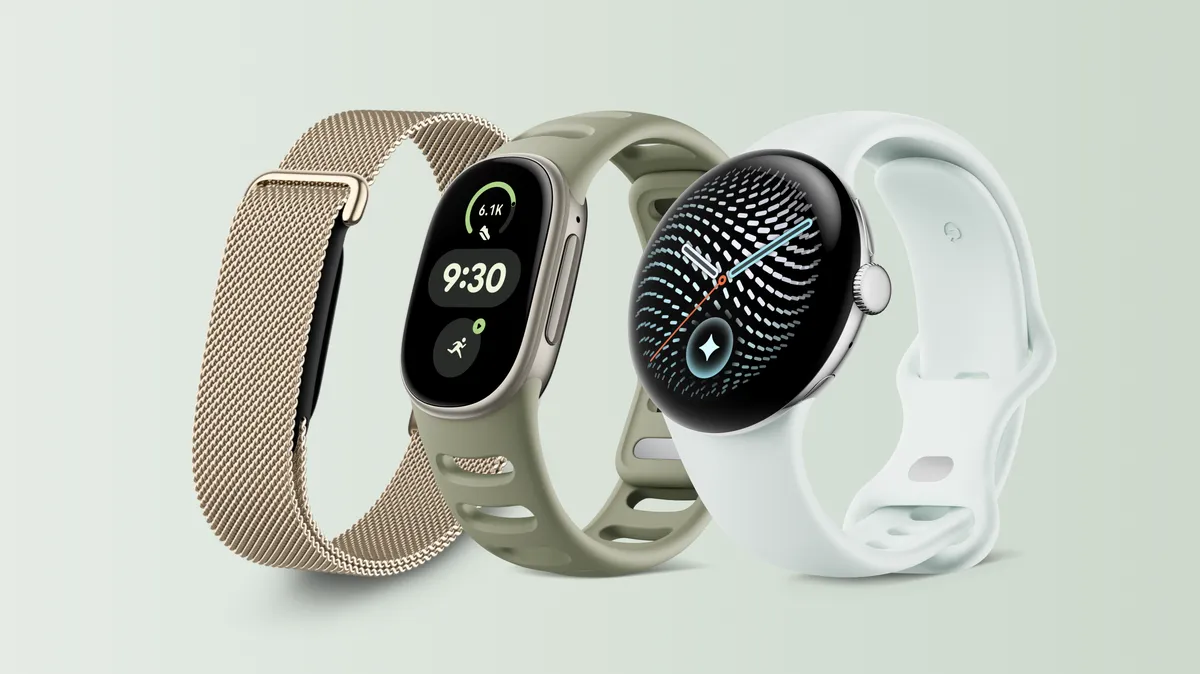
Google has officially announced the Google Fitbit Edge, a new fitness tracker designed for people who want advanced health features without wearing a full-sized smartwatch. The device combines a slim design, a bright display, detailed fitness tracking, and AI-powered coaching in one compact wearable.
Announced on October 12, 2026, the Fitbit Edge is positioned between Google’s screenless Fitbit Air and its more advanced Pixel Watch lineup. It aims to make everyday health monitoring easier while helping users understand their activity, sleep, and workout performance.
According to Google’s official announcement, the tracker costs $179.99 in the United States. Pre-orders are open, and retail availability is scheduled to begin on October 27, 2026. Buyers will also receive three months of Google Health Premium with their purchase.
What Is the Google Fitbit Edge?
The Google Fitbit Edge is a next-generation fitness tracker built for everyday use. It brings together familiar Fitbit activity tracking and Google’s newer health tools in a design that is slimmer than a traditional smartwatch.
Unlike the screenless Fitbit Air, the Edge has a display that allows users to check their fitness information directly from their wrist. At the same time, it is designed to be simpler and more focused on health than a full smartwatch.
The device is aimed at people who want to track daily steps, monitor their heart rate, follow workout progress, and review sleep patterns without carrying a large wearable.
Google says the tracker has a thin profile measuring 11.5mm and uses a recycled-aluminum enclosure. Its lightweight design is intended to make it comfortable enough to wear throughout the day and night.
Google Fitbit Edge Features and Specifications
The Fitbit Edge includes several features for users who want to monitor their health and fitness routines.
| Feature | Details |
|---|---|
| Display | Hybrid OLED display |
| Battery life | Up to seven days, depending on usage |
| GPS | Built-in precision GPS |
| Workout tracking | More than 50 exercise modes |
| Automatic activity detection | Recognizes up to 100 workout types |
| Health monitoring | Heart rate, ECG, sleep, HRV and skin temperature |
| Water resistance | 5 ATM rating and IP68 protection |
| Design | Slim body with interchangeable bands |
| Starting price | $179.99 in the US |
| Retail availability | October 27, 2026 |
Actual battery life and feature availability can vary based on settings, usage, and region. Some advanced health features require a Google Health Premium subscription.
A Brighter Display With a Slim Design
One of the main highlights of the Fitbit Edge is its display. Google says the new screen offers 46% more viewing area than previous Fitbit trackers, making it easier to read fitness information and notifications.
The Hybrid OLED display supports glanceable tiles and customizable clock faces. Users can quickly check steps, weather, heart rate, sleep information, and other important details without opening a separate app.
The tracker also includes a physical side button. This provides a quick way to control certain functions, such as pausing a workout, without relying entirely on touchscreen controls.
Google has also focused on comfort. The device measures 11.5mm thick and uses a curved design intended to sit naturally on the wrist. Its case is designed to be lightweight, making it suitable for users who prefer a smaller alternative to a traditional smartwatch.
AI-Powered Fitness Coaching With Google Health
Another important part of the Fitbit Edge experience is Google Health Coach, which uses Gemini-powered intelligence to offer personalized guidance.
The goal is to help users make sense of their activity and health trends rather than simply displaying numbers. Depending on the available features and subscription, the coach can use information from a user’s fitness routine and wellness data to provide suggestions and adapt workout plans.
For example, someone training for a running event may want help following a consistent schedule. Another user might focus on improving sleep or building a regular exercise habit. Personalized guidance can help users organize their routines around these goals.
However, AI-generated advice should be treated as general wellness guidance, not a medical diagnosis. Users should consult qualified healthcare professionals about symptoms or medical concerns.
Google Health Coach features require a Google Health Premium subscription and an internet connection. Availability can also vary by location and device.
Fitness Tracking for More Than 50 Exercise Modes
The Fitbit Edge is designed to support a wide range of activities, from everyday walking to more structured workouts.
Google says users can track more than 50 exercise modes directly from the tracker. These include activities that benefit from real-time measurements, such as running, Pilates, and high-intensity interval training.
During a workout, users can view relevant information such as pace, heart-rate zones, and exercise performance. This can help them follow a training plan without repeatedly checking their phone.
The tracker also offers automatic activity recognition for up to 100 workout types. This means it can identify certain activities even when users forget to start tracking manually.
Built-in GPS allows the device to record outdoor routes without requiring a phone to provide the GPS signal. Google claims GPS tracking accuracy has improved by up to 40% compared with previous generations.
An integrated altimeter can also measure elevation changes, which may be useful for hill running, stair workouts, and other activities involving changes in height.
Health Monitoring, Sleep Tracking, and Recovery
The Fitbit Edge includes sensors designed to give users a broader picture of their daily wellness.
Continuous heart-rate monitoring helps users follow changes during rest, exercise, and recovery. The tracker also supports ECG assessments through its dedicated app in supported countries.
For sleep tracking, the device monitors sleep stages and heart-rate variability, or HRV. It also includes a skin-temperature sensor that tracks overnight changes. Together, these measurements can help users review sleep patterns and understand how their routines may relate to recovery.
Google is also introducing Health Guardian features that can track certain health trends, including blood-pressure and insulin-resistance trends, where available. These features are intended for general wellness and informational purposes. They do not provide a medical diagnosis or replace clinical measurements.
Users should check local availability and feature requirements before buying the device, especially if they are interested in ECG or other advanced health tools.
Up to Seven Days of Battery Life
Battery life is an important consideration for fitness trackers because users may want to wear them while sleeping as well as during exercise.
Google says the Fitbit Edge can provide up to seven days of battery life on a single charge. This estimate depends on how the device is used, the settings selected, and which features are active.
The tracker also supports magnetic fast charging. According to Google, five minutes of charging can provide up to a full day of battery life under its stated test conditions.
The Edge is rated for water protection up to 5 ATM and also carries an IP68 rating. This makes it suitable for many everyday activities and workouts, although water resistance does not mean the device is completely waterproof under all conditions.
Another notable feature is its replaceable battery and repair-focused internal design. This could help extend the device’s useful life compared with wearables that are difficult to repair.
Fitbit Edge Price, Colours, and Availability
Google has announced a starting price of $179.99 for the standard Fitbit Edge in the United States. The device is available for pre-order through the Google Store and participating retailers, with retail sales scheduled to begin on October 27, 2026.
The standard model comes in four finishes: Obsidian, Fog, Olive, and Canyon. Buyers can also choose from different interchangeable bands, depending on availability.
Google has also announced a Stephen Curry Special Edition, developed with the basketball player and Google Performance Advisor. This version is priced at $219.99 and features colours inspired by Curry’s style.
Purchasers of the Fitbit Edge receive three months of Google Health Premium, according to Google’s announcement. Users should review the subscription terms to understand what happens when the promotional period ends.
Google has confirmed the US pricing and launch details, but buyers in other countries should check local availability, pricing, and supported health features before making a purchase.
How Does Fitbit Edge Compare With Fitbit Air and Pixel Watch?
The Fitbit Edge fills a middle position in Google’s wearable lineup.
The Fitbit Air is designed for people who prefer a screenless, lightweight tracker. The Fitbit Edge adds a display and more direct access to workout information, while the Pixel Watch offers a broader smartwatch experience.
This makes the Edge a potential choice for users who want more than basic activity tracking but do not need every feature found on a full smartwatch.
Its strongest selling points are the display, built-in GPS, longer battery life, automatic activity detection, and personalized coaching options. However, some features depend on a subscription or regional support, so buyers should compare the complete experience rather than the hardware alone.
What is the price of the Google Fitbit Edge?
The standard Google Fitbit Edge starts at $179.99 in the United States. The Stephen Curry Special Edition costs $219.99.
When will the Fitbit Edge be available?
Google says retail availability begins on October 27, 2026. Pre-orders opened following the October 12 announcement.
How long does the Fitbit Edge battery last?
Google estimates up to seven days on a single charge. Actual battery life depends on usage and settings.
Does the Fitbit Edge support GPS?
Yes. It includes built-in GPS, allowing users to track outdoor activities without relying on their phone for GPS positioning.
Does the Fitbit Edge include AI coaching?
Yes. It supports Google Health Coach, which uses Gemini-powered intelligence to provide personalized wellness and fitness guidance. Some features require a Google Health Premium subscription.
Is the Fitbit Edge a smartwatch?
It is primarily a fitness tracker with a display and selected smart features, including notifications, Google Maps, and media controls. It is designed to sit between a basic fitness band and a full smartwatch.
Why the Fitbit Edge Launch Matters
The Google Fitbit Edge reflects a growing interest in wearables that combine useful health information with a comfortable design and longer battery life. Rather than trying to replace every smartwatch feature, Google is focusing on fitness tracking, daily wellness, and quick access to important information.
Its success will depend on how well the tracking features perform in everyday use, how useful people find the AI coaching, and whether the subscription-based tools offer enough value.
For users who want a fitness-focused wearable with a screen, built-in GPS, and up to a week of battery life, the Fitbit Edge is a new option worth comparing with other trackers before buying.