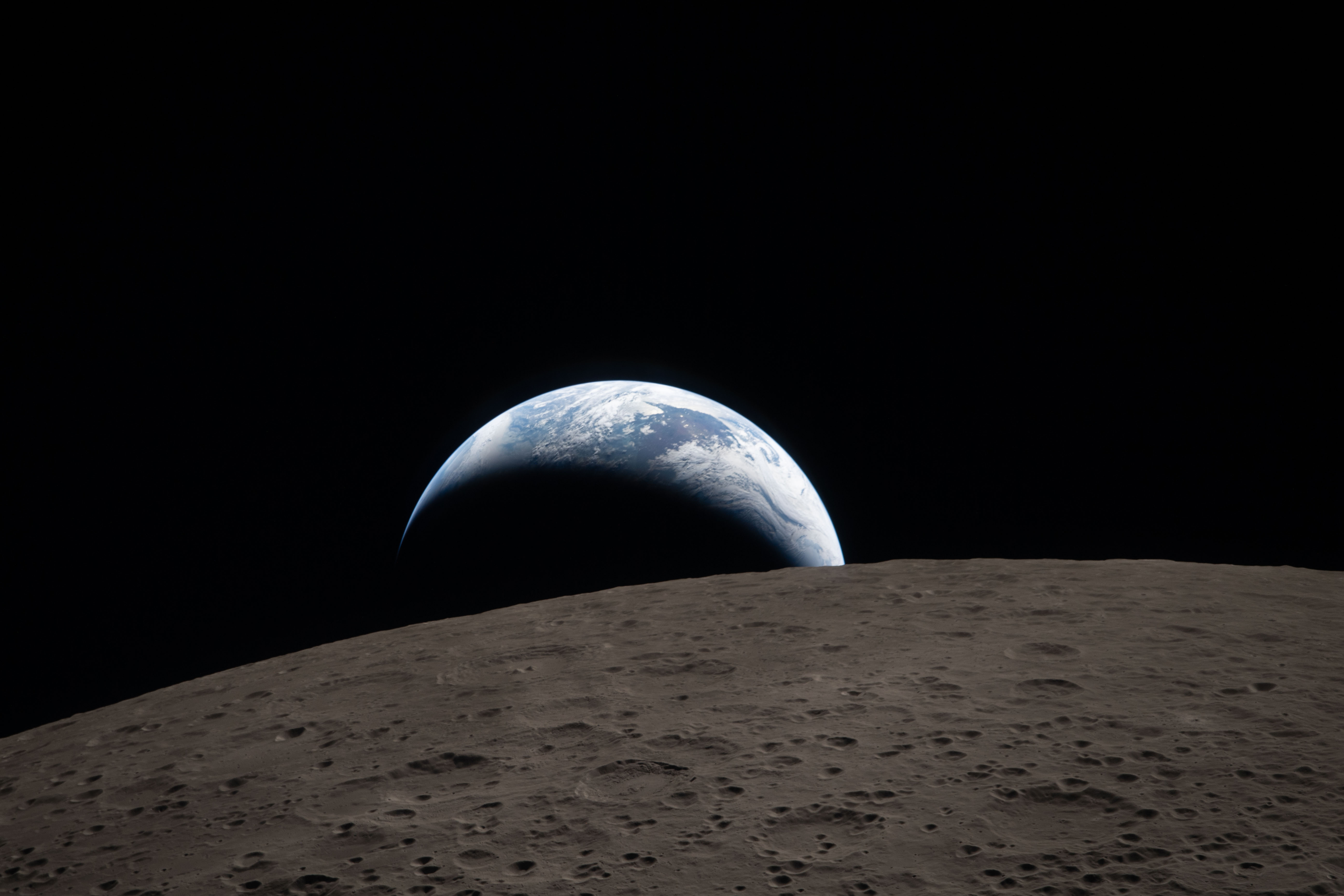
NASA has released a major collection of lunar science data gathered by the four astronauts of the Artemis II mission during their journey around the Moon in April 2026. The newly available material includes thousands of images, videos, audio recordings, and notes that could help scientists better understand the Moon’s surface and prepare for future human exploration.
The data became publicly available on October 7, 2026, through NASA’s Planetary Data System. The collection contains more than 800 gigabytes of material, including over 11,000 full-resolution images and videos. It also includes about 8.5 hours of audio recordings in which astronauts described lunar features as they observed them from the Orion spacecraft.
The release is important because astronauts can notice details that automated instruments may not describe in the same way. Their observations of color, shape, texture, and sudden flashes of light offer scientists another way to study the Moon.
What Is the Artemis II Mission?
Artemis II was NASA’s crewed mission to travel around the Moon and return safely to Earth. The mission tested important systems needed for future human spaceflight and gave astronauts an opportunity to observe the lunar surface from close range.
The crew included four astronauts:
- Reid Wiseman: NASA astronaut and mission commander.
- Victor Glover: NASA astronaut and pilot.
- Christina Koch: NASA astronaut and mission specialist.
- Jeremy Hansen: Canadian Space Agency astronaut and mission specialist.
During the mission, the crew traveled farther from Earth than any humans had before, surpassing the distance record set by Apollo 13. The spacecraft completed its lunar journey before the astronauts returned to Earth on April 10, 2026.
Artemis II did not land on the Moon. Instead, it tested crewed lunar travel and collected observations that could support later missions, including future efforts to land astronauts on the lunar surface.
NASA Releases More Than 800 GB of Moon Data
NASA’s latest release gives scientists and the public access to a large collection of material recorded during the lunar flyby. The information is stored in the agency’s Planetary Data System, a public archive used to preserve data from planetary exploration missions.
The collection includes:
- More than 11,000 full-resolution lunar images and videos.
- Around 8.5 hours of recorded astronaut observations.
- Images with handwritten notes and scientific annotations.
- Observations of lunar craters, ridges, surface colors, and other geological features.
- Records that help explain how the crew carried out its scientific observations.
NASA has also published a preliminary lunar science report, a report on lunar science operations, and a guide to using the released data. These resources help researchers understand what the astronauts observed and how the information was collected.
Making the material publicly available allows researchers at universities, laboratories, and other institutions to examine the observations. It also gives future scientists a lasting record that they can compare with data from robotic spacecraft and earlier lunar missions.
Astronauts Spot Flashes of Light on the Moon
One of the most interesting findings involves brief flashes of light seen on the Moon’s dark surface.
During the lunar flyby, astronauts watched for small flashes that could occur when rocky particles from space strike the lunar ground. These events are known as lunar impact flashes.
NASA’s preliminary science report describes five faint flashes that the crew observed while looking at the darkened Moon. Scientists reviewed the reports and considered other possible explanations, such as cosmic rays or reflections from the spacecraft. The observations were then assessed by the lunar science team.
The Moon has no thick atmosphere like Earth’s to slow down most incoming space rocks. As a result, small objects can hit its surface at high speed and release energy as light and heat.
Observing these flashes can help researchers learn more about the small objects that strike the Moon. It may also improve understanding of the impact environment that future astronauts, habitats, and equipment could face.
The observations are especially valuable because the crew recorded where the flashes appeared and added notes to images. Researchers can use these details to compare observations and study the events more closely.
The Moon Has More Colors Than Many People Expect
The Artemis II crew also described subtle color differences across the lunar landscape. Although the Moon often looks gray in photographs, astronauts reported shades of brown, tan, white, blue, green, black, and gray during their observations.
These colors may appear faint to the human eye, but they can offer useful scientific clues.
Different lunar materials reflect sunlight in different ways. Changes in color and brightness can help researchers investigate mineral composition, surface age, and geological history. Scientists can compare what the astronauts saw with photographs, spectral measurements, and other data collected by robotic missions.
The crew’s descriptions are useful because the astronauts could adjust their attention as they looked through the Orion spacecraft’s windows. They could describe a feature, discuss it with scientists on Earth, and capture additional images when needed.
This combination of human observation and scientific instruments gives researchers another source of information about the lunar surface.
Studying Craters, Ancient Lava Flows, and Ridges
The astronauts documented several types of geological features during the flyby. These included impact craters, ancient lava flows, fractures, and ridges.
Each feature tells part of the Moon’s history.
Impact craters
Craters form when asteroids, meteoroids, or other objects strike the lunar surface. Their size, shape, and surrounding material can help scientists understand the force of an impact and how the surface has changed over time.
Some craters have raised rims, terraced walls, or central peaks. These details can reveal how material moved during an impact.
Ancient lava flows
Long ago, volcanic activity spread lava across parts of the Moon. After cooling, the lava formed broad, dark plains in areas known as lunar maria.
Studying the edges, colors, and textures of these regions can help researchers understand the Moon’s volcanic past and how its interior evolved.
Ridges and fractures
Ridges and cracks can form as the lunar crust changes shape. They provide clues about stresses inside the Moon and the forces that have affected its surface.
Images from Artemis II allow scientists to examine these features from a human-crewed spacecraft. The observations can add context to information gathered by earlier lunar orbiters and robotic missions.
A Rare View of a Solar Eclipse From Space
The crew also experienced a solar eclipse during its journey around the Moon. From the Orion spacecraft, the Moon moved in front of the Sun, allowing the astronauts to observe the Sun’s outer atmosphere, known as the corona.
The corona is normally difficult to see from Earth because the Sun’s bright surface overwhelms it. During a total solar eclipse, the Moon blocks much of that bright light, making the corona visible.
The astronauts photographed the scene and recorded observations of structures in the corona. Jeremy Hansen also described a feature that appeared to pulse or change over time in the crew’s view.
These observations provide another example of the scientific opportunities created by a crewed lunar flight. Astronauts could record what they saw and describe changes while the event was taking place.
Why Human Observations Matter in Lunar Science
Robotic spacecraft have mapped large parts of the Moon and collected important measurements for decades. However, astronauts can contribute a different type of information.
Humans can quickly notice unexpected details, compare nearby features, and explain what they see in natural language. They can also respond to questions from scientists and adjust their observations as a mission progresses.
Before Artemis II, the astronauts trained to identify lunar geological features and describe them clearly. During the mission, they followed an observation plan prepared by NASA’s lunar science team. Scientists on Earth monitored their reports and provided additional guidance when useful.
The new data preserves more than photographs. It also captures the astronauts’ thinking, spoken descriptions, and notes made during the flight.
Researchers can compare those human observations with existing lunar maps and instrument data. Over time, this approach may help improve the way future crews document the Moon.
How the Data Could Support Future Artemis Missions
NASA plans to use the experience and findings from Artemis II to help prepare for future lunar exploration.
The images and scientific notes could help researchers identify questions that future missions should investigate. The observations may also help astronauts learn what to look for when exploring the surface directly.
Future Artemis missions are expected to build on lessons from earlier flights, including spacecraft operations, crew training, navigation, and science planning. Artemis II’s observations add to this work by providing a detailed record of what astronauts noticed during a lunar flyby.
The data does not, by itself, answer every question about the Moon. Researchers will need time to compare the material, test interpretations, and publish further results. However, the release provides a valuable starting point for additional studies.
The public archive also means that scientists outside NASA can examine the material and develop their own research questions. Students and space enthusiasts can explore selected images and learn how astronauts conduct observations in deep space.
Where Can You View the Artemis II Moon Data?
People interested in the mission can explore the material through NASA’s official science resources.
The NASA Artemis II science pages provide highlights from the crew’s observations, while the Planetary Data System hosts the broader scientific collection. NASA has also made its preliminary lunar science report and supporting documents available for further study.
Readers can start with NASA’s Artemis II Preliminary Lunar Science Report to learn about the impact flashes, lunar colors, and other observations. The report also links to selected images and additional mission resources.
What Comes Next for Artemis II Research?
The release of more than 800 GB of data marks an important step in the scientific work that continues after the mission. Researchers can now examine the crew’s images, audio recordings, and annotations in greater detail.
The impact flashes may help scientists investigate small objects striking the Moon. Color observations could support research into lunar materials, while images of craters, ridges, and old lava flows may add to the understanding of the Moon’s geological history.
Artemis II was a crewed flight around the Moon rather than a landing mission, but the science collected during the journey gives researchers plenty to study. As analysis continues, the observations could help shape how astronauts explore the lunar surface during future missions.
The mission’s lasting contribution is not limited to spectacular photographs. It also includes a detailed scientific record created by astronauts who observed the Moon directly and shared what they saw with researchers on Earth.