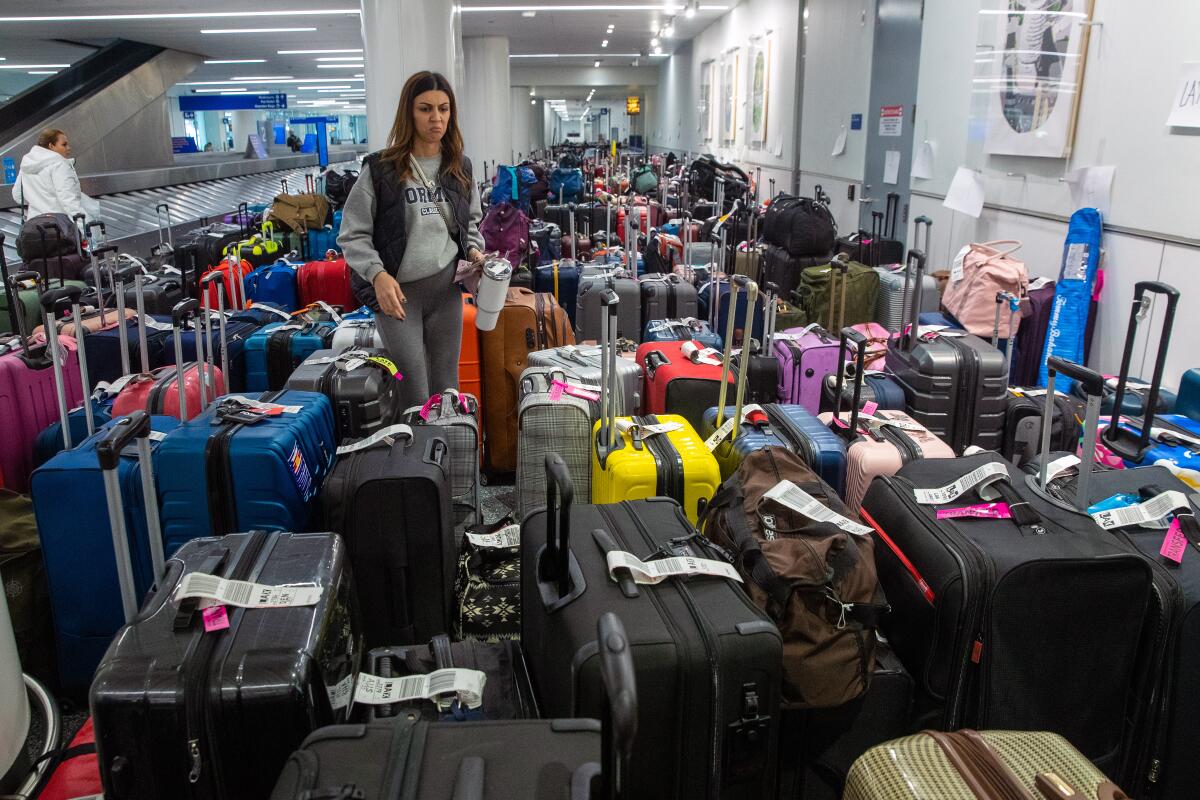
Southwest Airlines’ big meltdown wasn’t just about bad weather — it was also a story of old tech, brittle systems, and a business model that couldn’t handle a chain reaction. Let me explain what really went wrong, in simple words, so you (and your audience) can grasp the lessons.
Why the Southwest Meltdown Happened
1. It Started with a Brutal Winter Storm
The initial spark was Mother Nature. A severe winter storm swept across the U.S., grounding planes, freezing things, and disrupting normal operations.
When lots of flights are canceled, the airline has to reassign both aircraft and crew — and that’s where the trouble really began.
The Technical Breakdown
2. Outdated Crew-Scheduling Systems
Southwest used internal tools called SkySolver and Crew Web Access to manage crew assignments — but these systems were fragile.
During the storm, so many flights were canceled that these tools couldn’t cope with the volume. The system couldn’t match up where crew members were, which flights were available, and who could legally fly (considering work-hour rules).
Because the software failed, schedulers had to do much of the work manually — and that takes time, especially when things are changing fast.
3. Manual Work Overload
With the tech broken, hundreds (or even thousands) of crew members were stuck calling in. But Southwest’s phone system was also overwhelmed.
Long wait times, manually verifying crew availability, and reassignments by hand created a huge bottleneck.
Because of this, planes that could fly couldn’t get their crew aligned in time.
The Business Model Problem
4. Point-to-Point Network Makes Recovery Harder
Unlike some airlines that use a “hub-and-spoke” model (where many flights go in and out of a few big hubs), Southwest relies heavily on a point-to-point model.
This means a crew member might start in City A, fly to B, then C, D, and so on. In stable times, it works well, but during chaos, it’s a nightmare to realign both crew and planes.
When the storm hit, crew members got stranded in the wrong places, and without a strong backup plan, things unraveled quickly.
Infrastructure and Winter Preparedness
5. Weak Winter Infrastructure
Southwest itself admitted that it didn’t have enough winter equipment in key airports.
They lacked sufficient deicing trucks, engine heaters, and other cold-weather gear, which slowed down operations significantly during freezing conditions.
Also, there were staffing challenges: people to operate this equipment weren’t always available or prepared for such extreme conditions.
Organizational & Communication Gaps
6. Disjointed Teams and Processes
During the crisis, internal communication broke down. Different teams (like scheduling, crew management, and operations) didn’t coordinate well, which caused more delays.
These silos made it hard to fix problems fast, especially when sudden changes were happening all the time.
7. Overconfidence and Under-Preparedness
Some insiders suggest Southwest was overly confident in its ability to manage disruptions and underestimated how bad things could get.
They didn’t have enough “extra” staffing or systems ready to deal with a truly massive and prolonged disruption.
Aftermath: Why It Was a Big Deal
- The U.S. Department of Transportation fined Southwest $140 million for failing to handle the crisis properly.
- Southwest committed to major fixes: buying more deicing trucks, building more deicing pads, and improving its crew scheduling software.
- Their internal review found the root causes: weak winter operations, too much manual scheduling, and poor cross-team coordination.
The Bigger Picture: Lessons We Can Learn
Think of the Southwest meltdown like a chain reaction:
- A big storm knocks out many flights →
- Technology can’t keep up with reassignments →
- People pick up the slack manually →
- But manual systems can’t scale fast enough →
- Communication breaks down, and chaos spreads.
It’s not just about “weather happened” — it’s how an organization’s systems, preparedness, and planning can turn a disruption into a full-blown crisis.