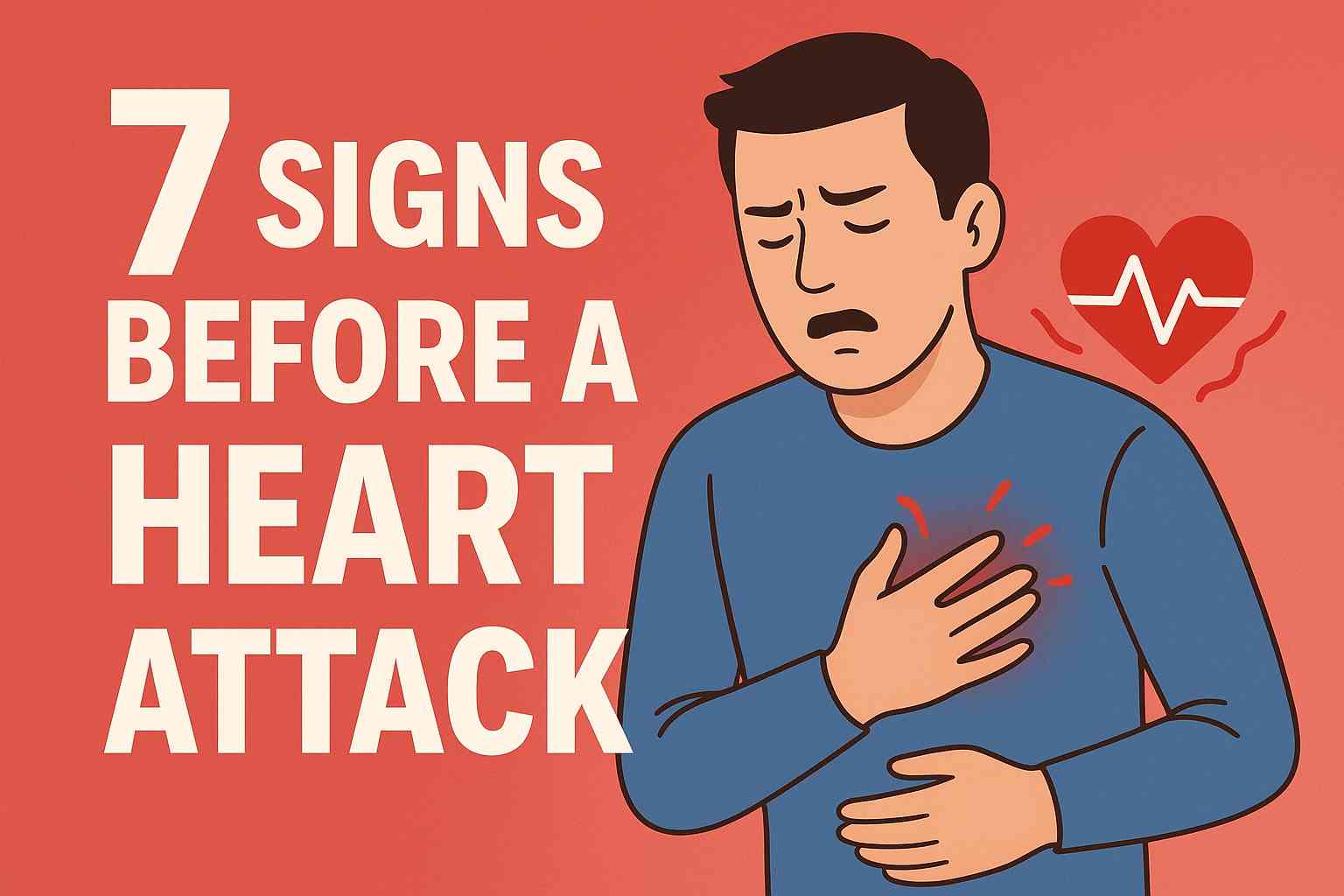
A heart attack doesn’t always happen suddenly — your body often gives warning signs days or even weeks before it occurs. 7 signs before a heart attack can be easy to miss if you don’t pay attention to your body. Recognizing these early symptoms can save your life or someone else’s. Let’s understand these signs in simple words with real-life examples that make it easier to relate.
Chest Discomfort or Pressure: The Classic Signal
The most common sign people experience is chest pain or discomfort. It may feel like someone is sitting on your chest or a tight band around it. Some people mistake it for heartburn or indigestion. For example, imagine feeling a sudden heaviness in your chest while resting or climbing stairs — that’s not something to ignore. This pressure often lasts for a few minutes, goes away, and then comes back. It’s your heart’s way of signaling distress due to a lack of oxygen.
Shortness of Breath: Even Without Chest Pain
Breathing difficulty can appear before or during a heart attack, sometimes even without chest pain. It happens because your heart struggles to pump blood efficiently, making your lungs work harder. Picture walking up a few steps and suddenly gasping for air — even though you do it every day without issues. That could be a sign your heart needs attention.
Unusual Fatigue: When Ordinary Tasks Feel Hard
If you find yourself exhausted after small tasks, like making your bed or taking a short walk, your body might be warning you. Fatigue before a heart attack is often more than normal tiredness. For instance, a woman once shared that she felt extremely drained for days before her heart attack — she thought she was just overworked. But it was her heart struggling silently.
Pain in Other Parts of the Body
Not all heart-related pain starts in the chest. Sometimes, it begins in the arms, neck, jaw, back, or even stomach. This happens because nerve signals from the heart can spread pain to other areas. For example, a man might feel sharp pain in his left arm or a woman might feel tightness in her jaw — both could be early warnings.
Cold Sweats and Dizziness: The Silent Alarm
Breaking out in a cold sweat for no reason or feeling dizzy is another danger sign. It happens when the heart isn’t pumping blood properly, leading to a drop in blood pressure. Imagine sitting comfortably, and suddenly, your palms are sweaty and you feel like you might faint — that’s not something to brush off.
Nausea or Indigestion That Doesn’t Go Away
Some people, especially women, experience nausea, stomach pain, or a feeling of indigestion before a heart attack. It might feel like food isn’t digesting properly, but it’s actually a signal from your heart. If you’ve had no recent diet changes and still feel discomfort in your stomach or chest area, it’s time to check with a doctor.
Anxiety or a Sense of Doom
Strangely, many people report feeling a strong sense of anxiety or unease before their heart attack — as if something bad is about to happen. This feeling isn’t caused by stress but by your body’s reaction to changes in heart function. For example, a woman once described feeling “like something was terribly wrong” the night before her heart attack, even though she was calm and resting.
Listen to Your Heart — Literally!
Your body whispers before it screams. These 7 signs before a heart attack are not random — they’re your body’s emergency alerts. Whether it’s chest pressure, sudden tiredness, or unexplained sweating, don’t ignore them. If something feels off, get medical help immediately. Acting fast can mean the difference between life and loss.
Sometimes, your heart speaks the loudest when it struggles the most — so listen closely, because it might just be asking for help.