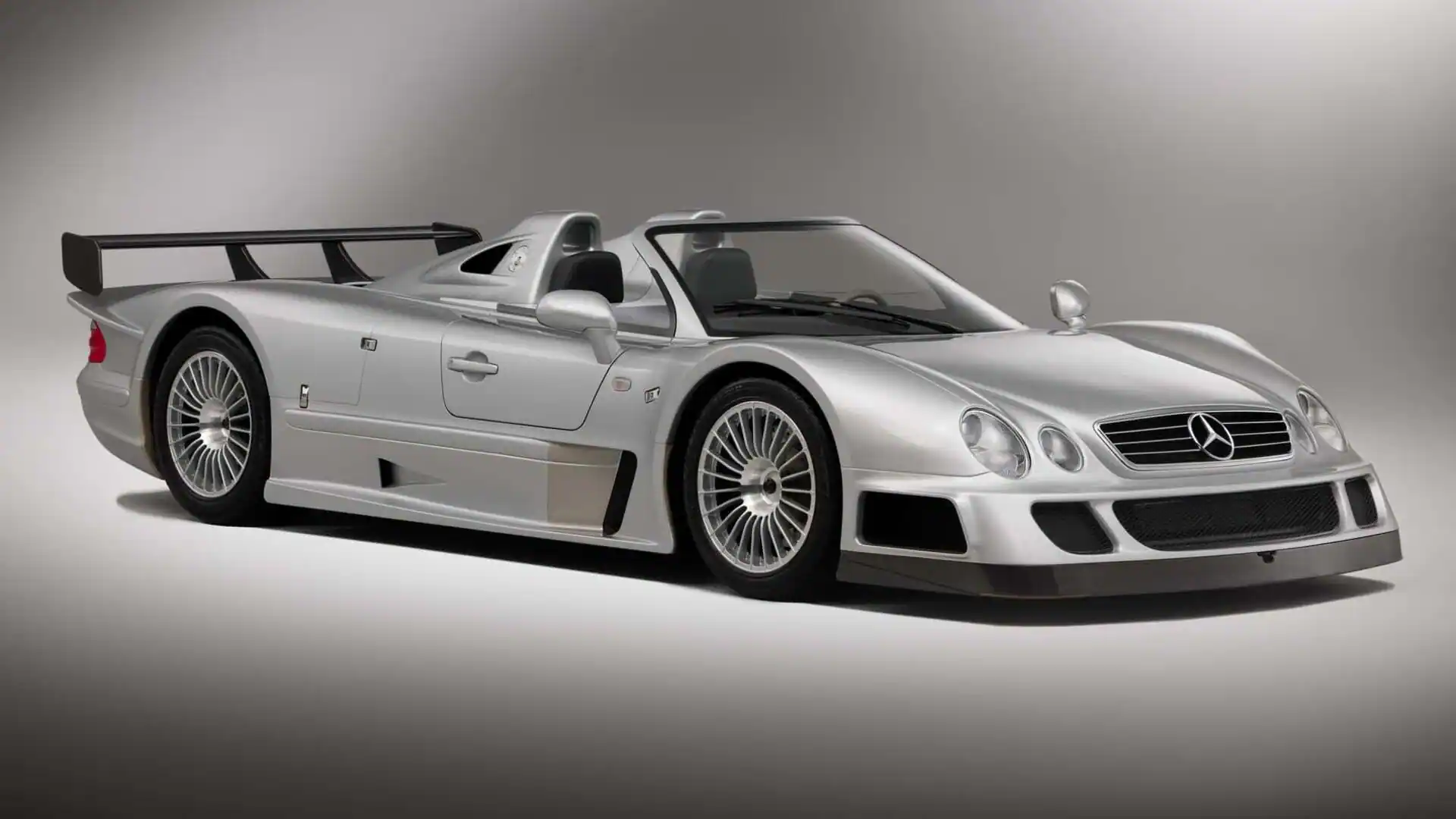
The Mercedes-Benz CLK GTR Roadster is a real unicorn in the world of supercars. Right at the start: only six roadster versions of the CLK GTR were ever built.
Here’s an educational, India-news style blog post, in simple words, that explains everything you should know about this rare machine.
What is the CLK GTR Roadster?
The CLK GTR started life as a race car built by Mercedes‑Benz for the FIA GT Championship in the late 1990s.
To meet homologation rules (which meant building road-legal versions), Mercedes built a small number of road cars.
Then, a special “roadster” (open-top) variant was produced by the specialist firm HWA GmbH (which worked with Mercedes/AMG) using either spare chassis or modifications of existing cars.
In other words: the CLK GTR Roadster is basically a street-legal version of a race car, with the roof removed. It has the looks, performance and exclusivity to match.
Exactly How Many Were Made?
Let’s break down the numbers:
- According to multiple sources, in total about 20 coupe (hard-top) street-legal CLK GTRs were built.
- Then, the roadster version: “only six” roadster units were built.
- Some sources mention two prototypes and then 28 cars in total (including 20 coupes + 6 roadsters + 2 prototypes).
So the simplest answer for the roadster: six units worldwide.
That means if you see one on the road (or in India), you’re looking at one of six in the world. Rare indeed.
Why So Few & Why It Matters
Why did Mercedes make so few? A few reasons:
- The car was built for homologation: the racing rules required a certain number of road-legal cars to allow the race car version to compete.
- Engineering complexity: The CLK GTR road car shared many components with its racing counterpart (carbon-fibre monocoque, sequential gearbox, V12 engine) which makes production expensive and niche.
- The roadster variant was even more specialised: removing the roof required structural reinforcements, relocating engine air intakes (since the roof scoop of the coupe could no longer be used) and redesign of body parts.
- Collector value: Because so few were built, each one becomes highly sought-after. That in turn means they are kept in collections rather than seeing daily driving.
Because of that rarity, the roadster has immense value in the collector market and is considered one of the most exclusive supercars in the world.
What It Means for India & Indian Car Enthusiasts
You might be wondering: “What relevance does this have in India?” A few points:
- For Indian collectors or wealthy enthusiasts thinking of the rare-car market, knowing that only six roadsters exist globally sets expectations. If one appears in India or is imported, its value and uniqueness are exceptional.
- Supercar culture in India is growing (Mumbai, Delhi, Bangalore etc). A car like the CLK GTR Roadster would be show-stopping.
- From a content/marketing angle (and since you’re creating digital marketing/social media content): You can use “only six in the world” as a powerful hook to attract attention, whether you’re writing about exotic cars, supercars, or high-end collector culture in India.
- The story also underlines premium content: heritage, engineering, rarity. That kind of storytelling works well on platforms (Instagram, LinkedIn) when you tie it into luxury lifestyle, automotive passion in India, or even investment in rare cars.
Key Specs & Features to Flag
Here are some standout details of the roadster variant to make your blog or social post richer:
- Engine: The road-car version used a 6.9-litre V12 derived from the racing car.
- Performance: Extremely high output for its era and built with racing hardware — carbon-fibre monocoque, sequential gearbox, etc.
- Appearance differences: The roadster changed the roof design (no fixed roof), had side air-intakes (since roof scoop was removed), roll-over bars behind the seats for structural integrity.
- Value: Because of rarity, each example sells for multiple millions of dollars in the global market. (For example one was auctioned for over $10 million)
These details help engage readers who are car-enthusiasts or curious about supercars.
Use This as a Story Hook
Instead of a classic “conclusion”, here’s a creative twist: imagine you’re at an exotic-car gathering in India. Amid Lamborghinis and Ferraris, you spot this one-of-six roadster quietly parked. The crowd leans in. You dip into the story: how Mercedes built it to dominate races, how it transforms into a street-legal car, how only six exist. You become the narrator of that moment — and your audience in India even if they never own one, they feel the thrill of rarity.
Feel free to use this scenario in your social-media post or content piece: “Spotting one in Mumbai/Delhi would be like finding a gold coin in your driveway.”