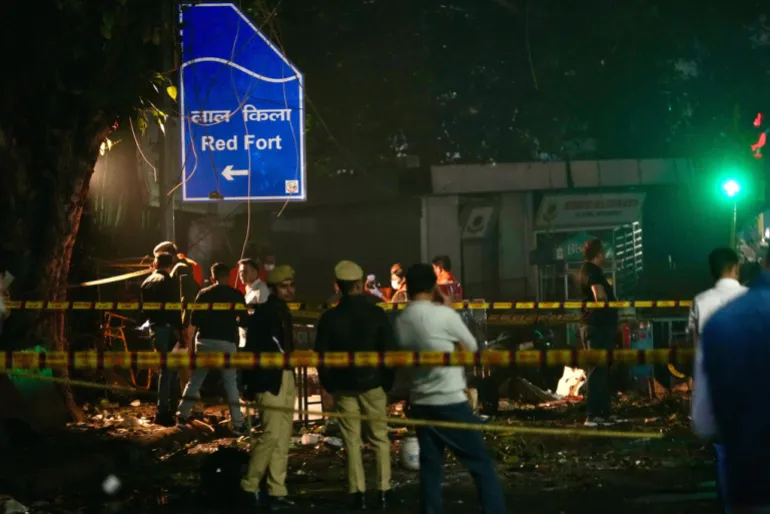
The moment the explosion near Red Fort occurred in Delhi on 10 November 2025, it shook more than just the ground beneath. The blast happened near the entrance of the Red Fort (Lal Qila) in Old Delhi, at the traffic signal close to the metro station. According to authorities, a slow-moving car stopped and then exploded, killing at least eight people and injuring many more.
The scene was chaotic. Witnesses described how the vehicle erupted in flames, nearby cars caught fire, and the shock-wave shattered glass across the street. One local trader recalled how a paan shop was just a few metres away and the windows rattled from the force.
What triggered the explosion near Red Fort?
Investigators are still probing the cause of the explosion near Red Fort. Early reports from the Delhi Police indicate the car that exploded was a Hyundai i20 with Haryana licence plates.
The authorities have also invoked the Unlawful Activities (Prevention) Act (UAPA) under suspicion of terrorism-linked activity, though the motive has not been officially confirmed.
To give an example: imagine a car entering a busy market area and then staying parked or slow-moving near a major monument for hours. That’s what officials say happened — the vehicle was present in that location long enough to raise concerns.
Where did it happen and why it matters?
The explosion near Red Fort took place at a location that is both historic and heavily crowded. The Red Fort is a 17th-century Mughal palace, a major tourist attraction and the site from where India’s Prime Minister addresses the nation on Independence Day.
The surrounding roads are narrow, packed with vehicles, vendors, and pedestrians. The blast occurred at around 6:50pm, during a time when people were returning from work, shoppers were still out, and the metro station nearby was active.
This location matters because in such dense, historic zones the impact of any explosion is magnified: physical damage, civilian casualties, and public fear all multiply quickly. For example, a trader in the market said the tremor felt like an earthquake.
What lessons can we draw from this incident?
When we look at this unfortunate event, there are several things to keep in mind — lessons that apply not just to Delhi but to any city with crowded, historic or tourist-heavy areas.
Firstly, security and vigilance matter. The fact that the investigation is treating the incident under anti-terror law tells us how seriously authorities view such threats. The explosion-near-Red Fort is under a UAPA probe.
Secondly, urban infrastructure and emergency planning need to keep pace. The car exploded in a busy area where evacuation routes may be limited, and the presence of several vehicles ignited by the blast complicated rescue operations. In the example of Old Delhi’s Chandni Chowk nearby, many shops closed almost immediately out of panic.
Thirdly, public awareness plays a role. People who frequent high-density zones should know their surroundings — exits, gathering spots, safe zones. Think of it like knowing where the nearest safe exit is when you enter a large shopping mall: if you’re in a narrow lane with only one way out, any incident becomes more dangerous.
What happens next after the explosion near Red Fort?
The investigation will continue. Forensics, CCTV footage, witness statements and intelligence will all feed into understanding what happened. The use of a major monument’s nearby area — Red Fort — places the incident under high visibility and urgency. Some states and key installations have already been put on high alert.
On a community level, the city of Delhi will likely review how to manage dense historic-tourist zones: traffic movement, vehicle parking, vendor encroachments, emergency services access. Markets near the blast site—like Chandni Chowk—have already reported wide-spread shutdowns and fear among shopkeepers.
In a situation like this, we can treat it as both a call-to-action and a reminder: action for authorities to upgrade safety, and a reminder for all of us to remain aware of our surroundings, especially in high-risk or crowded places.
In the heart of Old Delhi, near the storied ramparts of the Red Fort, the impact of one blast rippled far beyond the physical damage—it touched how people move, how markets operate, how safety is thought about. It’s an episode that invites reflection and readiness, not just reaction.