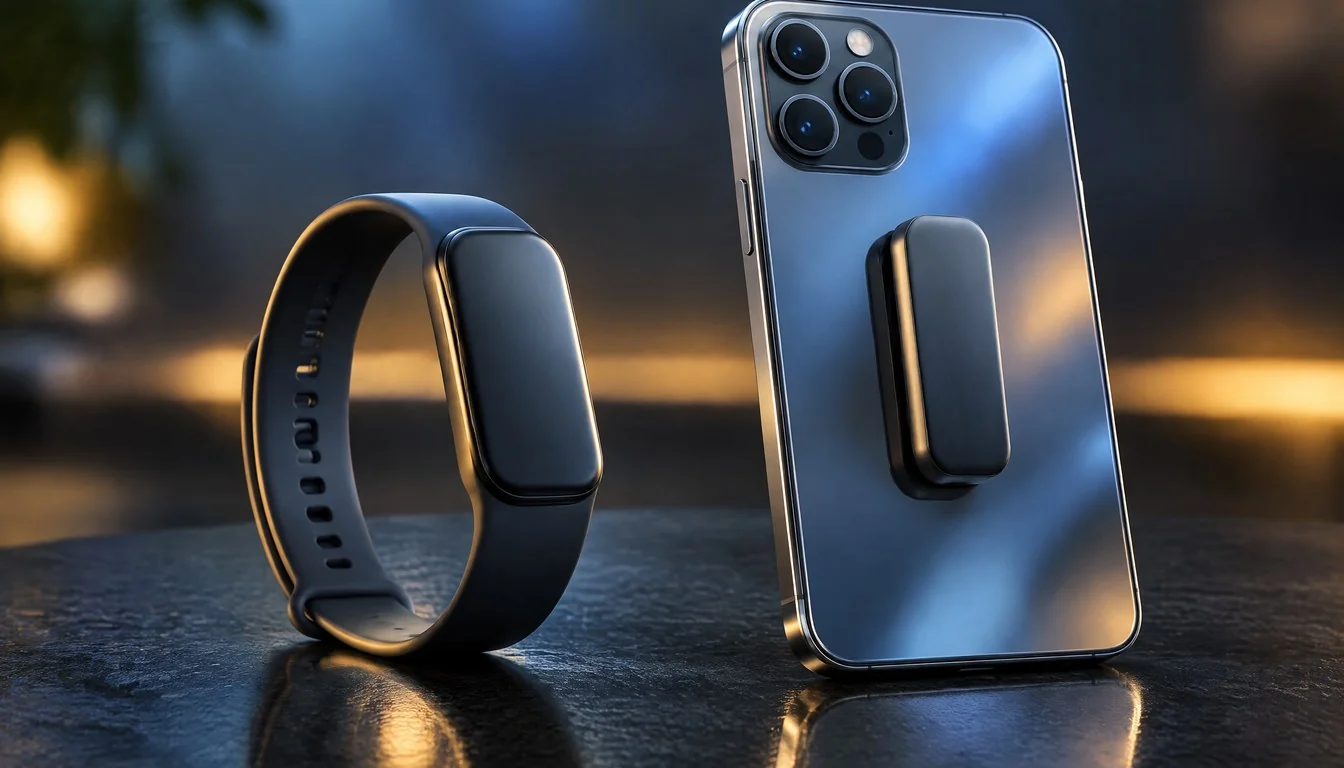
Amazon is expanding its artificial intelligence (AI) business with two new personal AI products: Bee Frontier and Bee Eclipse. Announced on October 15, 2026, these devices aim to help people remember important conversations, organise daily tasks and manage information more easily.
Unlike a traditional smart speaker or chatbot, these products focus on information from everyday conversations. They can turn discussions into summaries, reminders, to-do lists, and useful insights. As a result, users may spend less time taking notes and more time focusing on the conversation itself.
Bee Frontier is a wearable AI device that users can wear on their wrist or clip to their clothes. Meanwhile, Bee Eclipse is a small device that attaches magnetically to a compatible phone. Both products connect with the Bee mobile app, while additional features are available through a paid subscription.
Amazon has also announced new connections with Alexa+ and Amazon.com. These integrations could help users retrieve information, manage tasks, and find products based on earlier conversations.
However, the new devices also raise questions about privacy, recording permissions, and subscription costs. Here is everything you need to know about Amazon Bee Frontier and Bee Eclipse, including their features, prices, battery life, and potential benefits.
What Are Amazon Bee Frontier and Bee Eclipse?
Amazon’s Bee product range focuses on personal AI that helps people remember important details from their daily lives.
For example, imagine discussing holiday plans with friends. You agree on a date, choose a hotel, and decide where to eat. Later, you may forget one or more details.
A Bee device aims to help solve this problem. When you activate it, the device processes the conversation and creates useful notes that you can review later.
The technology can also help with work meetings, lectures, personal reminders and everyday planning. Depending on the connected apps and subscription, it can suggest tasks, draft follow-up emails, and help organise calendar events.
Amazon has introduced two designs to suit different users.
- Bee Frontier: A wearable AI device that works as a wristband or clothing clip.
- Bee Eclipse: A compact, credit-card-sized AI device that attaches magnetically to a phone.
Both devices aim to make personal AI easier to use throughout the day. However, users should remember that the devices process audio only when activated, according to Amazon’s stated controls.
1. Bee Frontier: A Wearable AI Assistant
Bee Frontier is the next-generation wearable in Amazon’s Bee product family. It is designed for people who want help remembering important details without constantly reaching for their phones.
Users can wear it on their wrist with a soft silicone band or clip it to their clothing. This flexible design suits different situations, including work meetings, daily errands, and social activities.
The device includes two microphones with noise-filtering technology. These microphones help it capture useful speech in places such as busy offices and crowded restaurants.
Bee Frontier also offers up to seven days of battery life. Its IP67 water-resistance rating protects against dust and temporary water exposure under specified test conditions. A USB-C port handles charging.
The wearable comes in three colours:
- Onyx
- Lavender
- Sage
One of its main benefits is convenience. Instead of writing every detail down, users can activate the device and review the resulting summary later.
For example, a professional could use Bee Frontier to capture key points from a meeting. A student might use it to review a lecture. Someone running everyday errands could also use it to remember a shopping list.
However, users should always follow local recording laws and obtain the necessary permission before recording other people.
2. Bee Eclipse: An AI Device That Attaches to Your Phone
Bee Eclipse offers another way to use personal AI without wearing a wristband.
The device has a slim design, roughly the size of a credit card. It attaches magnetically to the back of a compatible smartphone, making it easy to carry.
According to Amazon, Bee Eclipse offers more than 21 days of battery life on a single charge. This longer battery life may appeal to people who want a device that needs less frequent charging.
Like Bee Frontier, Eclipse can turn conversations into summaries, reminders and action items.
Consider a phone call with family members about an upcoming trip. You might discuss arrival times, hotel options and restaurant choices. Bee Eclipse can help organise those details into a summary so you can check them later.
The device may also help users remember tasks agreed upon during work calls. Depending on the available integrations, users can turn those details into calendar events or follow-up actions.
Amazon plans to offer Bee Eclipse in four colours: Silver, Midnight, Honey and Blush.
Unlike Bee Frontier, which is already available, Bee Eclipse is listed as coming soon. Amazon has announced a starting price but has not provided a specific release date.
3. How Bee AI Turns Conversations Into Useful Notes
The main purpose of both devices is to convert everyday conversations into useful information.
When users activate Bee, the system processes audio and uses AI to identify important points. It can then produce a summary, highlight decisions, and suggest tasks.
This process may be helpful when a conversation contains several details that are easy to forget.
For example, after a business meeting, Bee could help organise the discussion into three sections:
- Key points: The main ideas discussed during the meeting.
- Action items: Tasks that need attention after the meeting.
- Follow-up: Reminders about deadlines or agreed next steps.
Users can review summaries through the Bee mobile app. Amazon has also introduced a desktop app for users who need to manage information on a computer.
The service supports different templates for activities such as lectures, care plans and brainstorming sessions. These templates help organise information according to the type of conversation.
Bee can also identify recurring themes in a user’s memories and suggest possible goals or actions.
Still, AI summaries are not always perfect. The system may miss a detail, misunderstand a name or produce an inaccurate summary. Users should check important information before relying on it for business decisions, appointments or other critical tasks.
4. New Integration With Alexa+ and Amazon.com
Amazon is connecting Bee with two important parts of its ecosystem: Alexa+ and Amazon.com.
These integrations aim to make information easier to access and use.
Access summaries through Alexa+
Users who connect Bee to Alexa+ can ask Alexa for information from their summaries and to-do lists.
For example, someone might ask for a recap of a recent meeting or the name of a book recommended by a friend. This could reduce the need to open the Bee app whenever they want to retrieve a detail.
The integration may be particularly useful for people who already use compatible Echo devices.
However, Alexa+ access depends on the required service, account and device setup. Some features may also require a Bee Pro subscription.
Get personalised shopping suggestions
The Amazon.com integration introduces another use for Bee.
Suppose you mention that you need dish soap, batteries, or a particular household product during a conversation. Bee may help you remember the item later and show relevant product recommendations through Amazon.com and the Bee apps.
This feature connects personal AI with online shopping. Instead of trying to remember every item you discussed, you can review suggested products when you are ready to shop.
However, users should review recommendations before making a purchase. A product suggestion does not always mean that the item is necessary or the best option for their needs.
5. Bee Works With Popular Productivity Apps
Bee can connect with several apps that people already use to manage their work and schedules.
Supported integrations include Gmail, Google Calendar, and Microsoft Outlook. The service also supports Apple HealthKit and photo-related features.
These connections can make the AI assistant more useful because conversations often lead to tasks outside the conversation itself.
For example, a meeting might result in a new appointment. Bee could help draft a follow-up email or prepare a calendar invitation based on the discussion.
Users may also connect health information or photos to add more context to their personal memories, depending on the available settings and permissions.
These integrations could help professionals, students, and busy households organise their activities in one place.
However, users should review the permissions they grant to connected apps. Access to email, calendars, health information and photos can involve sensitive personal data. Only enable integrations that provide a clear benefit.
6. Amazon Bee Frontier and Bee Eclipse: Price and Subscription
Amazon has announced different prices for the two devices.
| Product or service | Price and availability |
|---|---|
| Bee Frontier | $74.99; available now |
| Bee Eclipse | Starting at $99.99; coming soon |
| Bee Pro | $11.99 per month |
| Free access | Conversation summaries, recaps and 14-day memory |
| New-customer offer | 30 days of Bee Pro free |
The prices above are in US dollars. Buyers in other countries should check local availability, taxes, and pricing before purchasing.
The free Bee service includes conversation summaries, recaps, and a 14-day memory period. This gives users a way to try the basic features without paying a monthly fee.
Bee Pro adds more advanced tools, including unlimited recent conversation summaries, third-party app integrations, Alexa+ and Amazon.com connections, suggested to-do lists, daily memories, a personal chat assistant, conversation templates and the desktop app.
The subscription could be useful for people who plan to use Bee regularly for work or personal organisation.
However, the monthly cost matters. At $11.99 per month, a full year of Bee Pro would cost $143.88 before taxes, assuming the price remains unchanged.
Therefore, buyers should consider both the initial device price and the ongoing subscription cost. Someone who only needs occasional summaries may find the free plan sufficient.
7. Privacy and Security: What Users Should Know
Privacy is one of the most important issues surrounding personal AI devices.
These products process conversations that may include personal plans, workplace discussions, and information about other people. Users need to understand what the device captures and how the service handles the resulting data.
Amazon says Bee uses a security system called Bee Private Compute. According to the company, the system processes conversations in a secure environment and does not store raw audio after processing.
Amazon also says transcripts are encrypted using keys created and controlled by the user’s device. Users can delete their transcripts and summaries whenever they choose.
Both Bee Frontier and Bee Eclipse include a physical button to turn processing on or off. A visible indicator light signals when the device is active.
Amazon also says users are prompted to obtain permission from call participants each time a recording starts.
These controls are useful, but they do not remove every privacy concern. People nearby may not know that a conversation is being processed unless the user explains it. Recording rules also vary by location and situation.
For these reasons, users should obtain appropriate consent, check workplace policies, and avoid recording sensitive conversations without permission.
They should also review connected apps, account permissions, and data-retention settings before using the devices regularly.
8. How Bee Frontier and Bee Eclipse Compare
Both devices offer similar AI features, but their designs serve different needs.
Bee Frontier suits people who prefer a wearable device. Its wristband or clothing clip makes it convenient to carry throughout the day. It also offers water resistance and up to seven days of battery life.
Bee Eclipse is designed for people who prefer a phone attachment. Its compact shape and longer claimed battery life may suit users who do not want another wrist-worn device.
The choice depends on how someone plans to use personal AI.
A professional who attends several in-person meetings might prefer the wearable design. Someone who mostly makes phone calls and wants a compact attachment may prefer Eclipse.
Neither device removes the need to review AI-generated summaries or manage recording permissions carefully.
Buyers should also consider the subscription features they need. In some cases, the monthly plan may influence the overall value more than the hardware itself.
9. Why Amazon Is Expanding Its Personal AI Business
The launch of Bee Frontier and Bee Eclipse shows how Amazon is expanding AI beyond traditional screens and voice assistants.
Many people already use AI chatbots to answer questions, write text, and summarise documents. Personal AI devices aim to take this idea further by helping users organise information from everyday activities.
Amazon’s approach connects wearable hardware with software services, shopping and Alexa+. This strategy could make AI more useful for people who already use several Amazon products.
The company acquired Bee in 2025, and these new devices represent its next step in developing the brand.
At the same time, the market faces several challenges. Customers must see enough value to justify the device price and any subscription fees. Companies must also earn trust by explaining how they process sensitive information.
Battery life, accurate summaries, easy controls, and reliable app integrations will all affect the user experience.
Ultimately, the success of these products will depend on whether they save users time and help them manage daily tasks without creating unnecessary complexity.
What are Amazon Bee Frontier and Bee Eclipse?
Bee Frontier and Bee Eclipse are personal AI devices from Amazon’s Bee brand. They turn conversations into summaries, reminders, to-do lists and other useful information.
How much does Bee Frontier cost?
Bee Frontier costs $74.99 in the United States. It is available in Onyx, Lavender and Sage.
What is the price of Bee Eclipse?
Bee Eclipse starts at $99.99 in the United States. Amazon says the device will be available soon in Silver, Midnight, Honey and Blush.
What is Bee Pro?
Bee Pro is a subscription priced at $11.99 per month. It adds features such as unlimited recent summaries, connected apps, Alexa+ and Amazon.com integrations, daily memories and a desktop app.
Does Bee store audio recordings?
Amazon says Bee processes audio in real time and deletes it after processing. It also says transcripts are encrypted and users can delete their summaries and transcripts. Users should review the company’s privacy information for the full details.
Can Bee connect to Alexa+?
Yes. Users can connect Bee to Alexa+ to access summaries, insights and to-do lists through compatible devices. Some features require a Bee Pro subscription.
How long does the battery last?
Amazon claims up to seven days of battery life for Bee Frontier and more than 21 days for Bee Eclipse. Actual battery life may vary with usage.
Is Bee available in India?
The announced prices are in US dollars. Buyers in India should check Amazon’s local store and official Bee information for confirmed availability, local pricing and supported features.
Who should consider buying a Bee AI device?
People who regularly attend meetings, take notes, manage busy schedules or want help remembering conversations may find Bee useful. Buyers should compare the free features with Bee Pro before deciding whether a subscription is worthwhile.
Amazon’s Bee Frontier and Bee Eclipse bring personal AI into two compact device designs. Frontier works as a wearable wristband or clothing clip, while Eclipse attaches magnetically to a smartphone.
Both devices aim to turn conversations into useful summaries, reminders, and action items. They also connect with productivity apps, while additional features link Bee with Alexa+ and Amazon.com.
The $74.99 Bee Frontier is available now, while Bee Eclipse starts at $99.99 and is coming soon. Users can access basic summaries and 14-day memory for free, or pay $11.99 per month for Bee Pro features.
These products could help people remember details, organise tasks and spend less time taking notes. However, buyers should consider the subscription costs, check AI-generated information and understand the privacy controls before using the devices.
As personal AI continues to develop, Amazon’s new products show how companies are trying to make AI a practical part of everyday life.