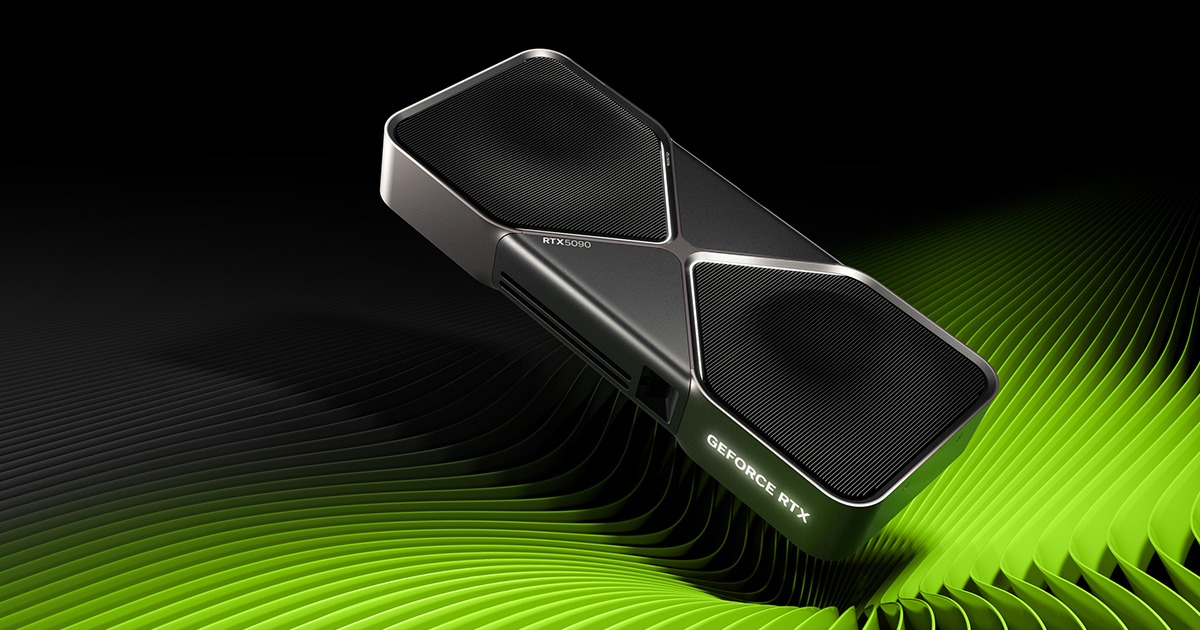
The Nvidia GeForce RTX 5090 is one of the most powerful graphics cards available for gaming, 3D rendering, and artificial intelligence workloads. However, buying one at US electronics retailer Micro Center may now involve more than checking the price and paying at the counter. Recent reports say some customers must show government-issued photo identification and sign a declaration promising not to export the product outside the United States.
The reported change came to public attention after a customer purchased a PowerSpec AI90 workstation containing an RTX 5090 at Micro Center’s Tustin, California, store. The customer said a store manager asked them to complete a form and have their driver’s license scanned before the sale could proceed. Tom’s Hardware reported the customer’s experience on October 2, 2026.
The report has raised questions about export controls, GPU shortages, customer privacy, and how retailers handle high-demand computer hardware. Here is what buyers should know about the reported policy and why it matters.
What Is Micro Center’s New RTX 5090 Identification Requirement?
According to reports, some customers purchasing an Nvidia RTX 5090 at Micro Center must complete an Advanced Computing Product Purchaser Declaration.
The process reportedly requires buyers to provide personal information, present government-issued photo identification, and confirm that they will not export or transfer the product outside the United States.
The reported form requests details such as:
- The buyer’s full legal name and residential or business address.
- Government-issued photo identification.
- Phone number and email address.
- The identity of the actual end user, if different from the buyer.
- The location where the product will be installed.
- The intended use of the hardware.
The form reportedly includes the statement “NO EXPORT – NO EXCEPTIONS.” Buyers must confirm that they will not export, re-export, resell, transfer, or otherwise cause the product to leave the United States.
The customer who first brought the process to public attention said the store introduced the requirement shortly before their visit. Reports also mention similar experiences at another location, but Micro Center has not publicly confirmed that the procedure applies uniformly across every store.
Customers planning to purchase an RTX 5090 should therefore contact their local store before visiting to confirm the current requirements.
Why Is Micro Center Asking Buyers for Identification?
The reported policy comes amid increased attention to the international movement of advanced computing hardware. High-performance processors and graphics cards can support demanding artificial intelligence workloads, making them important products in discussions about technology exports.
The RTX 5090 is a high-end consumer graphics card, but hardware in this performance category can also be used for AI development, data processing, and other computing tasks.
Identification checks can help a retailer establish who is buying a product and gather information about its intended destination and use. A signed declaration can also create a record that the buyer has acknowledged the retailer’s restrictions.
However, the precise reason Micro Center introduced this particular form has not been officially confirmed in the reports available as of October 3, 2026.
The connection with US export controls
The United States has maintained export controls on certain advanced computing chips and related technology. These rules have changed over time and can depend on the product, its technical specifications, the destination, the end user, and the intended use.
The US Bureau of Industry and Security (BIS) also provides guidance intended to help companies identify and reduce the risk of unauthorized diversion of controlled products.
According to TweakTown’s report, Micro Center’s form resembles information requested under anti-diversion guidance. However, the specific retail declaration does not appear to be a universally mandated federal form.
This distinction matters: export-control laws and a retailer’s own sales procedures are not necessarily the same thing. The reported identification process should not automatically be described as a new federal law requiring every US retailer to scan every RTX 5090 buyer’s ID.
Does the Requirement Apply to RTX 5090 Desktop PCs?
The reported case involved a complete PowerSpec AI90 workstation rather than only a standalone graphics card.
The system reportedly included an Nvidia RTX 5090 Founders Edition GPU, an AMD Ryzen 9 9950X processor, 64GB of DDR5 memory, and a 2TB SSD.
This suggests that the store’s process may cover certain complete computers containing the RTX 5090, not just individual graphics cards sold separately.
That distinction is important because customers sometimes purchase prebuilt computers when a standalone GPU is difficult to find. A buyer should not assume that purchasing a complete PC automatically avoids the additional checks.
The exact products covered by the policy have not been fully established publicly. Anyone planning to buy an RTX 5090 graphics card or a computer containing one should verify the requirements with the relevant Micro Center location.
How Could the Policy Affect GPU Buyers?
The new process could change the shopping experience for some customers.
1. Buyers may need extra time
Customers may have to complete paperwork and wait for an employee or manager to verify their identification. This could add time to a purchase, especially during busy periods.
2. Customers may need to provide more personal information
The reported form requests contact details, identification information, installation location, and intended use. Some buyers may be uncomfortable sharing this information with a retailer.
Customers should read the declaration carefully and ask store staff how the information will be stored, who can access it, and how long it will be retained.
3. The store may refuse a transaction
The reported declaration is part of the retailer’s purchasing process. A customer who does not meet the store’s requirements may be unable to complete the transaction.
Anyone who does not want to provide the requested details should clarify the policy with the store before making a trip or arranging a purchase.
4. Repeat purchases could receive more scrutiny
Identification checks may also help a retailer identify repeat purchases and discourage people from buying multiple units for resale. However, reports do not establish the exact scope or enforcement method of any purchase limits across all Micro Center stores.
Is Micro Center Trying to Stop GPU Scalping?
Scalping occurs when people buy products in limited supply and resell them at higher prices. High-demand graphics cards can attract this activity, particularly when supply is limited or buyers are willing to pay a premium.
A retailer can use identification checks, purchase limits, and customer records to make repeated buying more difficult. Requiring buyers to identify the intended end user may also discourage some transactions intended for unauthorized resale or export.
However, identification checks cannot eliminate every form of scalping or unauthorized export. People may still attempt to use intermediaries, different accounts, or other methods to purchase hardware.
It is also important not to treat every customer purchasing an expensive graphics card as a reseller. Gamers, PC builders, researchers, developers, and AI professionals may have legitimate reasons to buy the RTX 5090.
The policy’s actual impact will depend on how consistently the retailer applies it and how it handles suspicious transactions.
What Does This Mean for International Buyers?
International buyers should pay particular attention to the declaration’s wording.
The reported form requires the buyer to promise that the product will remain in the United States and will not be exported, re-exported, transferred, or resold in a way that causes it to leave the country.
Someone who purchases the product with plans to take it abroad could therefore face a direct conflict with the terms of the declaration.
Buyers should not assume that paying the retail price automatically permits them to export the hardware. They should check the applicable US export rules and the retailer’s terms before making a purchase.
The requirements may be especially relevant to visitors who intend to buy a GPU in the United States and carry it home. They should confirm the policy before visiting the store rather than expecting to resolve the issue at checkout.
What Should You Check Before Visiting Micro Center?
If you are planning to buy an Nvidia RTX 5090, take these steps before travelling to a store:
- Confirm availability: Check whether the RTX 5090 or a PC containing it is in stock.
- Ask about identification: Contact the store and ask whether government-issued photo ID is required.
- Confirm the paperwork: Find out whether you must complete the Advanced Computing Product Purchaser Declaration.
- Review the export terms: Read the form carefully, particularly its restrictions on export, resale, and transfer.
- Ask about personal data: Clarify how the store handles scanned identification and other information.
- Check purchase limits: Ask whether limits apply to the product or to repeat purchases.
These steps can help you avoid an unexpected delay or a rejected transaction.
Will Other Retailers Introduce Similar Requirements?
It is possible that other retailers could review their procedures for selling high-demand computing hardware, especially if export-compliance concerns continue to receive attention.
Some reports have noted similar paperwork at other computer retailers. However, this does not establish that all retailers will adopt the same process or that the requirements will be identical.
Retailers may have different internal policies based on their compliance procedures, products, and risk assessments. Any broader industry change will need to be confirmed through reliable reporting or official company statements.
For now, customers should check each retailer’s policy individually instead of assuming that Micro Center’s reported procedure applies everywhere.
What Buyers Should Keep in Mind
Micro Center’s reported RTX 5090 identification process adds another step to buying a high-end graphics card or a computer that contains one. The procedure appears connected to concerns about unauthorized exports and the movement of advanced computing hardware, but the retailer has not fully explained its policy publicly.
For customers, the practical approach is straightforward: confirm the store’s current requirements, understand the declaration before signing it, and ask how personal information will be handled. The scope of the policy and its long-term effect on GPU sales remain to be seen.