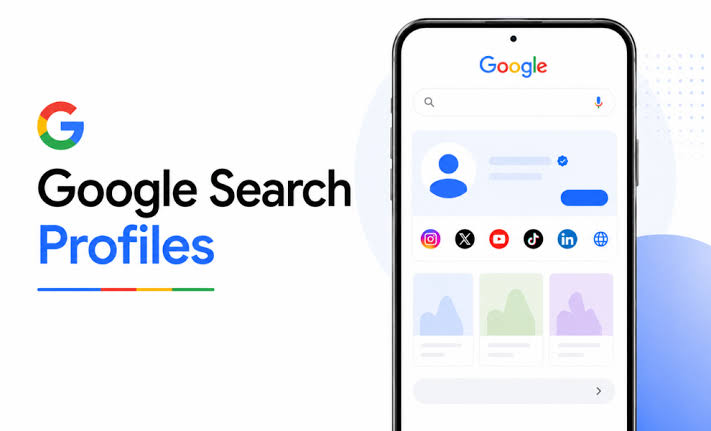
Google is making its Search Profiles more useful for publishers and creators with a new set of updates. The changes are designed to make it easier for publishers to manage their profiles, show their latest work, and build a stronger connection with audiences across Google Search and Discover.
Google first introduced Search Profiles in June 2026 as a way for publishers and creators to create a dedicated, shareable space for their work. The profile can bring together articles, videos, social media posts, and important links in one place. Users can also follow a publisher or creator through the profile and may then see more of their content in Google Discover.
Now, Google has updated the feature with several important changes. These include lower follower requirements, improved article displays, and the ability to manage multiple profiles from one Google account.
For publishers, news websites, bloggers, and established creators, these changes could make Search Profiles easier to use and more accessible.
What Are Google Search Profiles?
Google Search Profiles are dedicated profile pages for eligible publishers and creators.
The idea is somewhat similar to a social media profile, but the profile exists inside Google’s Search and Discover ecosystem.
A Search Profile can bring together a creator’s or publisher’s:
- Latest articles
- Videos
- Social media posts
- Website
- Social links
- Profile image
- Biography
- Other important content
Google says the goal is to help audiences find accurate and up-to-date information about sources while giving publishers and creators a central place to highlight their work.
Profiles can be accessed in several ways on mobile. Users can find them through a publisher or creator’s Knowledge Panel, by tapping the publisher or creator’s name in Discover, or through a direct profile URL.
This makes Search Profiles another part of Google’s wider effort to help people discover content from sources they choose to follow.
What Has Google Updated in Search Profiles?
The latest update focuses on three main areas.
First, Google has lowered the social or video follower requirement for eligibility. Second, article displays have been improved. Third, publishers can now manage multiple profiles from one Google account.
These changes are important because the original Search Profile system was aimed at publishers and creators with a relatively large following.
At launch, Google required a sizable following on at least one major social or video platform. Early reporting documented thresholds such as 100,000 followers on YouTube, Instagram, or X and 300,000 on TikTok.
The September update lowers the requirement to 10,000 followers across supported platforms, according to Search Engine Land’s report on Google’s changes.
That is a major change for smaller publishers and creators that were previously below the eligibility level.
Lower Follower Requirements Open the Door to More Creators
The lower threshold is one of the biggest changes in the latest update.
A 100,000-follower requirement can exclude many established niche publishers and creators. A website may have strong search traffic, loyal readers, and expertise in a particular subject without having hundreds of thousands of social followers.
Reducing the threshold to 10,000 makes the feature available to a broader group.
This could include:
- Independent news publishers
- Niche bloggers
- Industry experts
- YouTube creators
- Digital media brands
- Local publishers
- Specialist websites
- Established social creators
However, eligibility does not mean that a profile will automatically improve a website’s organic rankings.
That distinction is important for SEO professionals.
Search Profiles Are Not a Direct Ranking Factor
Publishers should not treat a Search Profile as an SEO shortcut.
Google’s Search Profile documentation and reporting around the feature indicate that creating a profile does not directly affect Search ranking. The main visibility opportunity is connected to audience discovery and Google Discover, especially when users follow a source.
In simple terms, creating a profile does not mean:
“Create a profile and your website will rank higher.”
Instead, it gives eligible publishers another way to present their identity and content within Google’s ecosystem.
This is an important difference.
Good SEO still depends on useful content, technical accessibility, clear site structure, strong information quality, and satisfying the user’s search intent.
The Follow Feature Is an Important Part of Search Profiles
One of the most interesting parts of Search Profiles is the ability for users to follow publishers and creators.
Google says people can follow sources from their profiles, making them more likely to see that source’s content in Discover.
This creates a connection between a publisher and its audience that goes beyond a single Google search.
For example, imagine someone regularly reads a technology website.
Instead of discovering one article through a search and leaving, the person can follow that publisher. Future content from the publisher may then appear in the user’s Discover experience.
This gives publishers another way to build recurring visibility.
It also fits Google’s broader work on personalization.
Google Is Giving Users More Control Over What They See
The Search Profile update is part of a larger change in how Google approaches content discovery.
In August 2026, Google announced additional personalization features across Search, Discover and Google News. These included improvements to Preferred Sources, allowing people to see more content from websites they choose.
Google has also expanded Preferred Sources into AI Search experiences.
The company says Preferred Sources can now appear in AI Overviews and AI Mode, helping users identify links from sources they already selected.
This suggests a broader direction: Google is giving users more ways to choose which publishers and sources they want to see.
Search Profiles fit naturally into that approach.
Better Article Displays Could Help Publishers Showcase Fresh Content
Google’s latest Search Profile update also includes improvements to how articles are displayed.
This matters because publishers often produce content across many categories and formats.
A profile can act as a central place where users see the latest work instead of searching through separate platforms.
For a news publisher, that could mean recent news stories.
For a specialist website, it could mean new guides and analysis.
For a creator, it could mean a mixture of articles, videos, and social content.
The goal is not simply to display a name. It is to create a clearer picture of what a publisher or creator currently produces.
Freshness is especially important for news and fast-moving topics, although publishers should not confuse “fresh” with “automatically better.”
A new article still needs original information, accurate reporting, and useful context.
Multiple Search Profiles Can Now Be Managed From One Login
The latest update also addresses a practical problem for larger publishers.
Google now allows publishers to manage multiple Search Profiles from a single login, according to Search Engine Land.
This can be useful for media companies that operate several publications or sub-brands.
For example, one organization might manage:
- A technology news website
- A business publication
- A sports website
- A regional news brand
Previously, managing separate profiles could require different Google accounts.
A single-login approach can make administration simpler.
It also makes the feature more practical for publishing organizations with multiple brands.
What Search Profiles Mean for E-E-A-T
Search Profiles could be particularly interesting from an E-E-A-T perspective.
Google’s Search guidance has long emphasized aspects such as experience, expertise, authoritativeness, and trustworthiness when evaluating the quality of content.
A Search Profile does not automatically prove that a publisher is trustworthy.
However, a clear publisher identity can make it easier for users to understand who is behind the content.
A strong profile can include:
- A clear publisher name
- A professional profile image
- A useful biography
- A website link
- Relevant social accounts
- Current articles
- Videos and other published work
This creates a clearer identity around the content.
For publishers, this supports a broader SEO strategy focused on transparency.
Why Publisher Identity Matters More in AI Search
Search is changing quickly because people are increasingly asking AI-powered systems to summarize information.
Google itself says people are using generative AI tools to find, sort, and understand information, while AI Overviews and AI Mode are creating new opportunities for brands, publishers, and creators.
In this environment, publisher identity can become increasingly important.
When users encounter information from a website, they may want to know:
Who published it?
Is this a specialist source?
Does this publisher regularly cover the subject?
Can I find more work from the same source?
Search Profiles do not answer every one of these questions, but they provide another Google-controlled surface where publisher information can be presented.
Search Profiles and Google Discover
Google Discover is particularly important to understand when discussing Search Profiles.
Traditional Search is largely based on a user’s query.
Discover works differently.
Users can see content based on their interests and activity without entering a traditional search query.
Search Profiles connect to Discover through the Follow feature.
Google says people who follow a source are more likely to see that source’s content in Discover.
For publishers, this creates an opportunity to build a recurring audience inside Google’s ecosystem.
But Discover traffic can be unpredictable.
Publishers should not build their entire traffic strategy around Discover.
A stronger approach is to use Discover as one part of a wider strategy that includes organic search, direct traffic, newsletters, social media, and returning readers.
What Publishers Should Do With the New Update
Check Your Search Profile Eligibility
Eligible publishers should first check whether they can claim a Google Search Profile. If your profile is available, take time to complete it with accurate and updated information.
Use Your Profile as Part of Your Brand
Your Search Profile should be treated as an extension of your publisher brand. Your profile name should match the name readers already recognize across your website and social media channels.
Write a Clear Publisher Bio
Your biography should clearly explain what your publication covers and what type of content readers can expect. Keep it simple and useful rather than filling it with keywords.
Add Official Website and Social Links
Make sure your website and social media links point to your official accounts. This helps users find your original content and understand that the profile represents a real publisher or creator.
Use a Professional Profile Image
Your profile image should be clear, professional, and consistent with your brand identity. Publishers can use their official logo, while individual creators can use a recognizable professional photo.
Highlight Your Original Content
Most importantly, the content connected to your profile should represent your real work. Focus on original articles, reporting, research, videos, or other content that provides value to your audience.
Avoid Keyword Stuffing
Do not treat your Search Profile as another place to add keywords repeatedly. Google Search is increasingly focused on helping people find useful information. A profile written naturally and clearly can give readers a better understanding of who you are and what you publish.
How Creators Can Improve Their Search Profile
Creators should also think beyond follower numbers.
A strong profile should quickly answer three questions:
Who are you?
What do you create?
Where can people find your work?
For example, a technology creator could describe their focus on AI, smartphones, and software.
A food creator could highlight recipes, restaurant reviews, and cooking videos.
A financial publisher could explain its coverage of markets, business, and personal finance.
The goal is clarity.
A user should understand the creator’s subject area without having to read dozens of posts.
Do Search Profiles Replace a Website?
No.
A Search Profile should not be viewed as a replacement for a publisher’s website.
Your website remains the primary place where you control your content, technical SEO, internal links, structured data, advertising, subscriptions, and other business functions.
The Search Profile is an additional Google presence.
This distinction is important because platforms can change their features and policies.
Publishers should continue investing in their own websites and audience channels.
Search Profiles and Content Quality
The new feature does not change one of the most important SEO principles: content quality still matters.
A publisher cannot solve poor content simply by creating a Search Profile.
Google has repeatedly emphasized original, useful, and reliable information in its Search guidance.
Google has also introduced more ways for users to discover original content and firsthand perspectives, including improvements to Preferred Sources in AI Search.
For publishers, this means the bigger opportunity is not just creating a profile.
It is building a recognizable publishing brand that consistently produces useful work.
Avoid Creating Content Just for Google
The Search Profile update should not encourage publishers to produce more low-value content.
Instead, publishers should focus on topics where they have genuine knowledge or reporting ability.
For news websites, that means verifying information before publishing.
For specialist blogs, it means adding practical experience and useful examples.
For creators, it means providing original commentary or demonstrations rather than simply repeating information from other websites.
This approach is more closely aligned with Google’s broader helpful-content principles.
What This Means for SEO in 2026
The latest Search Profile update shows that SEO is no longer only about traditional blue links.
Google is building a larger content discovery ecosystem involving Search, Discover, News, Knowledge Panels, AI Overviews, and AI Mode.
Publishers and creators now have more ways to establish their presence across that ecosystem.
Search Profiles are one piece of that larger picture.
The most important SEO lesson is not to abandon traditional optimization.
Instead, publishers should combine:
High-quality content + clear publisher identity + strong technical SEO + audience trust + multiple discovery channels.
This creates a stronger long-term foundation.
What are Google Search Profiles?
Google Search Profiles are dedicated, shareable pages that allow eligible publishers and creators to showcase their articles, videos, social posts, website, and other information in Google’s ecosystem.
Who can use Google Search Profiles?
Google initially launched the feature for publishers and creators with a sizable following on at least one major social or video platform. The September 2026 update lowered the follower requirement to 10,000 across supported platforms, according to Search Engine Land’s report on the update.
Do Google Search Profiles improve rankings?
Creating a Search Profile is not a direct Google Search ranking factor. Its main visibility benefit is connected to content discovery and the ability for users to follow a source through Google Discover.
Can publishers manage multiple Search Profiles?
Yes. Google’s latest update allows publishers to manage multiple profiles from a single login, making the feature easier to use for organizations with multiple brands.
Where can users find a Search Profile?
On mobile, users can access a profile through a publisher or creator’s Knowledge Panel, by tapping their name in Discover, or through the profile’s direct URL.
Can a Search Profile help with Google Discover?
Yes. Users can follow publishers and creators from their Search Profiles, and Google says followers are more likely to see that source’s content in Discover.
Are Google Search Profiles available worldwide?
Google initially launched Search Profiles in the United States and said it planned to expand the feature to more publishers and creators around the world. Availability and eligibility should therefore be checked against Google’s current requirements for your market.
The Bigger Picture for Publishers and Creators
Google’s latest Search Profile update is more than a small design change.
Lowering the follower requirement makes the feature accessible to a much wider group of publishers and creators. Better article displays make it easier to showcase fresh work, while multiple-profile management is useful for publishing companies with several brands.
The most important opportunity, however, may be the connection between Search Profiles and Discover.
Users can follow sources they value, creating a more direct relationship between publishers and their audiences inside Google’s ecosystem.
Still, publishers should not expect a Search Profile to automatically increase rankings or traffic. It is better viewed as another digital presence and audience-discovery tool.
For SEO in 2026, the fundamentals remain important: publish original and useful content, demonstrate expertise, provide clear publisher information, maintain a technically healthy website, and build trust with readers.
Search Profiles can strengthen that overall strategy by giving publishers and creators another place to clearly show who they are and what they produce.
As Google continues to connect Search, Discover, and AI-powered experiences, having a recognizable and trustworthy publishing identity is becoming increasingly important. The publishers that combine that identity with genuinely useful content will be better positioned to build lasting relationships with their audiences across Google’s changing search ecosystem.