When we think of a day, we usually imagine the time it takes a planet to rotate once on its axis. A year, on the other hand, is the time required to complete one orbit around the Sun. On Earth, a day lasts 24 hours, while a year lasts 365 days.
But Venus, Earth’s closest planetary neighbor, most fascinatingly breaks these rules.
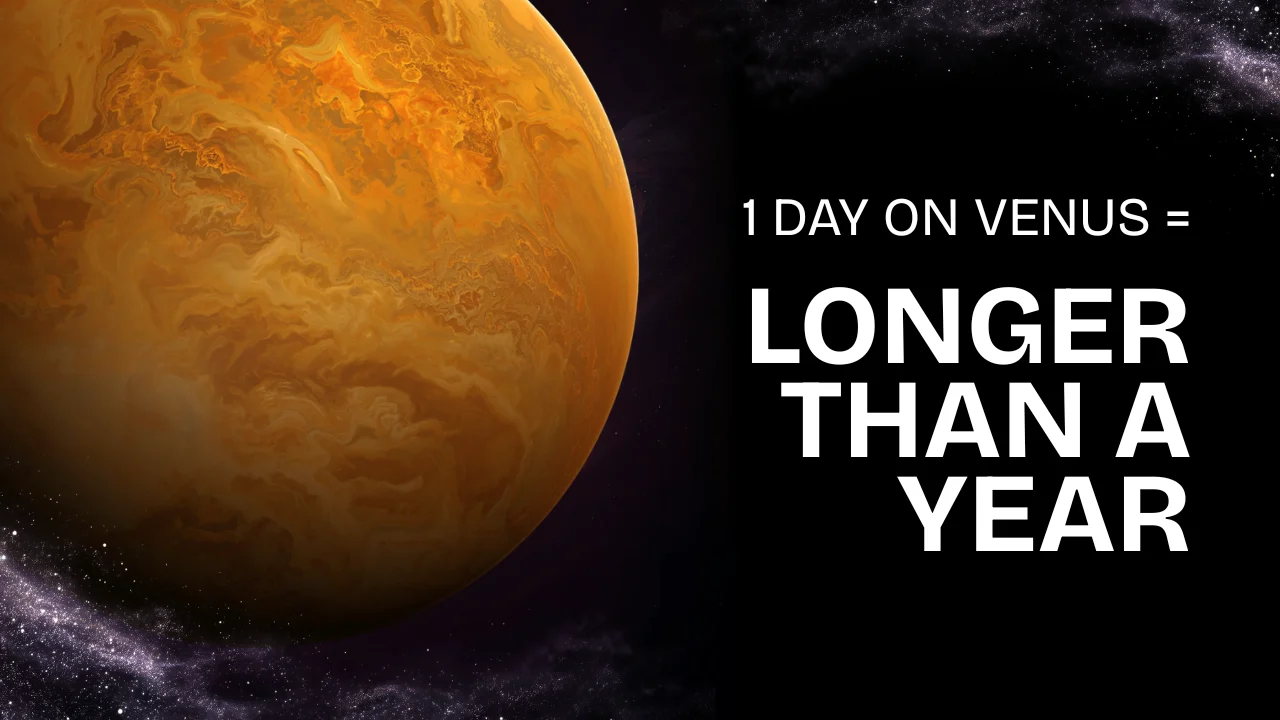
A single day on Venus lasts longer than an entire year on the planet. In fact, Venus takes 243 Earth days to complete one rotation, while it takes only 225 Earth days to orbit the Sun.
This unusual phenomenon makes Venus one of the strangest planets in our solar system. But why does it happen? And what makes Venus so different from Earth?
Let’s explore the incredible science behind the planet where a day is longer than a year.
How Long Is a Day on Venus?
A day on Venus, known as a sidereal day, lasts:
243 Earth days
This means Venus rotates extremely slowly compared to Earth. While Earth spins once every 24 hours, Venus takes nearly eight months to complete one rotation.
Because of this incredibly slow rotation, time on Venus works very differently from what we experience on Earth.
How Long Is a Year on Venus?
Venus completes one trip around the Sun in:
225 Earth days
This means Venus finishes an entire orbit around the Sun before it completes a single rotation.
In simple terms:
- One day on Venus = 243 Earth days
- One year on Venus = 225 Earth days
As strange as it sounds, a Venusian year ends before a Venusian day does.
Why Is a Day on Venus Longer Than a Year?
Scientists believe several factors contribute to Venus’s unusual rotation.
Extremely Slow Rotation
Unlike Earth, Venus spins very slowly. This slow movement causes one complete rotation to take much longer.
Retrograde Rotation
Venus rotates backward compared to most planets in the solar system.
On Earth, the Sun rises in the east and sets in the west. On Venus, the opposite would happen. The Sun would rise in the west and set in the east.
Scientists refer to this unusual motion as retrograde rotation.
Ancient Collisions
Some researchers believe a massive collision early in Venus’s history may have altered its spin, causing the planet to rotate slowly and in the opposite direction.
Although the exact cause remains uncertain, Venus remains one of the most mysterious worlds in our solar system.
How Does Venus Compare With Earth?
| Feature | Earth | Venus |
|---|---|---|
| Length of Day | 24 hours | 243 Earth days |
| Length of Year | 365 days | 225 Earth days |
| Rotation Direction | West to East | East to West |
| Average Temperature | 15°C | 465°C |
| Number of Moons | 1 | 0 |
These differences show just how unique Venus really is.
Why Is Venus Called Earth’s Twin?
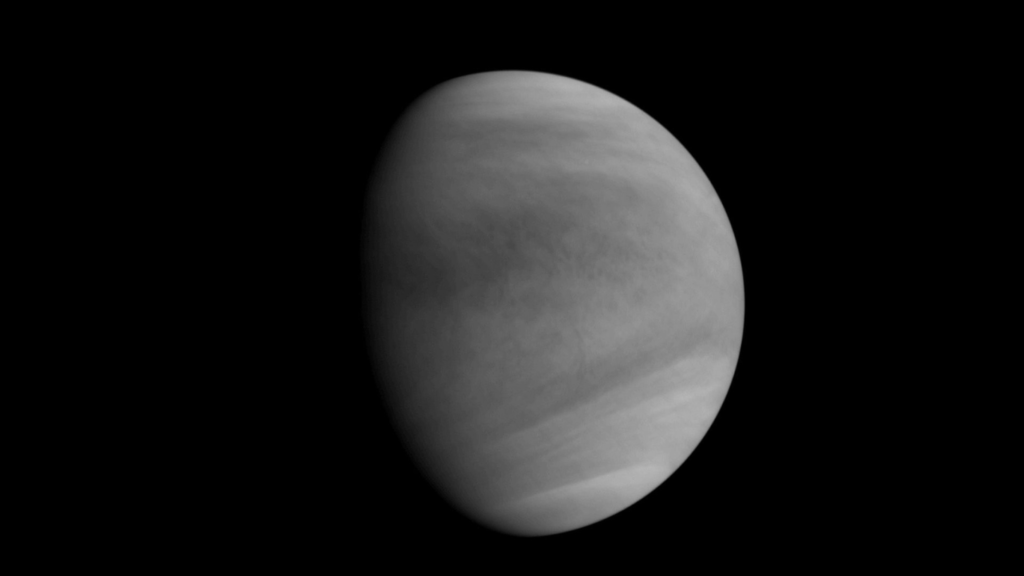
Venus is often called Earth’s twin because both planets are similar in size and mass.
However, beneath the surface, Venus is dramatically different.
Venus has:
- Thick clouds made of sulfuric acid
- A runaway greenhouse effect
- Surface temperatures hot enough to melt lead
- Crushing atmospheric pressure
- No liquid water
- No natural moons
These extreme conditions make Venus one of the most hostile environments in the solar system.
Like all planets, Venus exists within the Milky Way galaxy, which itself contains billions of stars.
Could Humans Live on Venus?
Living on the surface of Venus would be nearly impossible.
Temperatures reach approximately:
465°C (869°F)
Atmospheric pressure is about:
90 times stronger than Earth’s
The atmosphere is mostly carbon dioxide, creating a powerful greenhouse effect that traps heat.
Although the surface is inhospitable, some scientists have proposed that future floating habitats could exist high above the clouds, where temperatures and pressures are less extreme.
What Would a Sunrise Look Like on Venus?
Because Venus rotates backward, an observer standing on the planet would witness a strange phenomenon:
- The Sun would rise in the west.
- The Sun would move slowly across the sky.
- A single sunrise-to-sunset cycle would take months.
This makes Venus unlike any other planet in our solar system.
Space Missions That Explored Venus
Over the decades, several spacecraft have studied Venus.
NASA’s Mariner Missions
These missions provided the first close-up observations of Venus.
Soviet Venera Program
The Venera probes became the first spacecraft to land successfully on another planet and transmit images from the surface.
Magellan Spacecraft
NASA’s Magellan mission mapped nearly 98% of Venus using radar.
Future Missions
Upcoming missions from NASA and other space agencies aim to uncover more secrets about Venus’s atmosphere, geology, and history.
Fascinating Facts About Venus
Here are some amazing facts about Venus:
- Venus is the hottest planet in the solar system.
- A day on Venus lasts longer than its year.
- Venus rotates backward compared to most planets.
- It has no moons or rings.
- Venus is often the brightest object in the night sky after the Moon.
- Surface pressure on Venus is strong enough to crush many spacecraft.
These facts make Venus one of the most fascinating planets ever discovered.
Why Scientists Study Venus
Understanding Venus helps scientists answer important questions about:
- Planetary evolution
- Climate change
- Greenhouse effects
- Atmospheric chemistry
- The history of Earth’s neighboring planets
Studying Venus may also help researchers understand the conditions required for life on other worlds.
Why is a day on Venus longer than a year?
Venus rotates extremely slowly, taking 243 Earth days to complete one rotation, while it takes only 225 Earth days to orbit the Sun.
How long is one day on Venus?
One day on Venus lasts approximately 243 Earth days.
How long is one year on Venus?
One year on Venus equals about 225 Earth days.
Does Venus rotate backward?
Yes. Venus rotates in the opposite direction of most planets, a phenomenon known as retrograde rotation.
Is Venus hotter than Mercury?
Yes. Despite being farther from the Sun than Mercury, Venus is hotter because its dense carbon dioxide atmosphere traps heat through an intense greenhouse effect.
Venus is truly one of the strangest planets in the universe. It’s incredibly slow, and backward rotation creates a fascinating situation where a single day lasts longer than an entire year. Combined with its scorching temperatures and mysterious atmosphere, Venus continues to captivate scientists and space enthusiasts around the world.
As future missions uncover more secrets about this mysterious world, Venus may help us better understand not only our solar system but also the countless planets that exist beyond it.
Explore more fascinating discoveries in our Space & Astronomy category.